Showing posts with label food. Show all posts

Wednesday, July 11, 2018

Comprehensive study confirms the cardioprotective effects of blueberries and strawberries

If you’re concerned about a heart attack, there are lots of steps you might take to reduce your risk. Perhaps you’re already exercising and eating a healthy diet, but you’d like to give your efforts that extra edge. Before your doctor convinces you to start taking a long-term regimen of risky medications that may or may not actually be effective, why not turn to nature for an alternative that is as delicious as it is powerful?
A study carried out by researchers from Harvard Medical School revealed just how much two particular berries can help reduce a person’s risk of heart attack: strawberries and blueberries. They looked at health data from more than 93,000 women aged 25 to 42 who participated in the Nurses’ Health Study, which included information about their diet and health over the course of 18 years.
They discovered that the women who ate the fewest blueberries and strawberries had the highest risk of having a heart attack, while those who ate the most of these berries were 34 percent less likely to have a heart attack. Consuming the berries regularly brought about the positive health benefits, and those with the healthiest hearts tended to eat at least three cups per week of the two fruits combined, on average.
These benefits came about regardless of other risk factors like alcohol intake, smoking, exercise, family history of heart attack, age and high blood pressure, which means you can increase your risk even further by combining a boost in your berry intake with other healthy changes.
Studies in mice have also shown blueberries’ value in heart health. Researchers from the University of Maine found that mice who were fed a blueberry-rich diet had significant improvements in how easily their veins expanded and constricted, which had a blood pressure-lowering effect.
Support our mission and enhance your own self-reliance: The laboratory-verified Organic Emergency Survival Bucket provides certified organic, high-nutrition storable food for emergency preparedness. Completely free of corn syrup, MSG, GMOs and other food toxins. Ultra-clean solution for years of food security. Learn more at the Health Ranger Store.

How do berries help your heart?

It is believed that their power comes from their high content of the flavonoids known as anthocyanins. These antioxidants can lower blood pressure and increase the flexibility of blood vessels.
Should you run out and buy supplements that contain these flavonoids? The scientists say no; they work best when you get them from the whole foods themselves, and organic varieties will give you more nutrients without the pesticide risk.
This is excellent news for people with heart concerns because berries are so easy to incorporate into your diet. Of course, a commercial blueberry pie isn’t going to do your heart any favors with its trans fats and high sugar content, but thankfully berries work so well with a number of healthy dishes.
For example, you can get your daily dose at breakfast by mixing some berries into your organic oatmeal or yogurt – be sure you sweeten it yourself with a bit of organic honey rather than buying the sugar-laden prepared varieties. You can work berries into your lunch or dinner by adding them to a salad; they pair extremely well with leafy greens like spinach, and you can make your own quick dressing with balsamic vinegar and extra-virgin olive oil to enhance their flavor and consume some heart-healthy fats. If you’re not inclined to cook, you can munch on a handful of berries as an easy snack at any hour.

Benefits of berry consumption extend beyond your heart

There are plenty of benefits to be gained by eating more berries, and they extend far beyond your heart. For example, regular blueberry consumption has been linked to a lower risk of Alzheimer’s disease, macular degeneration, and urinary tract infections, while strawberries have been found to support the brain, eyes, muscles, joints, and immune system.
Read Fruits.news for more coverage of the healing properties of raw fruits.
Sources include:
NaturalHealth365.com
NaturalNews.com

Read more: https://www.naturalnews.com/2018-07-08-comprehensive-study-confirms-the-cardioprotective-effects-of-blueberries-and-strawberries.html

Saturday, May 12, 2018

Roundup weedkiller more toxic than just glyphosate alone… alarming new findings reveal NON-active ingredients are poisons, too

Just how toxic is Monsanto’s most prolific herbicide, Roundup? While the active ingredient, glyphosate, has long been scrutinized, new research shows that active ingredients in pesticides and herbicides aren’t the only things people should be worried about. As many people have suspected, the so-called “inactive” ingredients featured in weedkillers like Roundup are not so benign after all.
What’s more disturbing: The fact that these purportedly innocuous ingredients are actually poison, or that we’re only just uncovering this sordid detail 40-some-odd years after Roundup’s debut? EPA estimates suggest that around 100 million pounds of Roundup are applied to farms and lawns across the U.S. every year. Just how deep does the Roundup rabbit hole go?

Science shows Roundup is pure poison

The U.S. National Toxicology Program (NTP) recently conducted its first-ever analysis of herbicide formulations that include glyphosate and other chemicals. Apparently, it’s taken over four decades for the government to suspect that perhaps, when glyphosate is combined with other chemicals, it becomes even more hazardous.
As The Guardian explains, while regulators have required that glyphosate be tested in isolation in the past, little to no research has been done on the actual formulations including glyphosate that are sold to consumers.
You might say that this method of handling pesticide regulation is ineffectual — and you’d be right. And it’s only taken forty years for the government to realize this?
Support our mission and enhance your own self-reliance: The laboratory-verified Organic Emergency Survival Bucket provides certified organic, high-nutrition storable food for emergency preparedness. Completely free of corn syrup, MSG, GMOs and other food toxins. Ultra-clean solution for years of food security. Learn more at the Health Ranger Store.
The EPA requested that the NTP conduct an investigation of glyphosate-containing pesticides after the World Health Organization’s International Agency for Research on Cancer (IARC) named glyphosate as a “probable human carcinogen.”
The NTP study has shown that glyphosate formulations are more dangerous than glyphosate is on its own. In their summary, NTP scientists say that glyphosate formulations reduced human cell “viability,” causing disruption in cell membranes.
The Guardian notes further that the NTP’s data shows enhanced toxicity from glyphosate formulations, along with an ability to kill human cells — but the organization is still averse to drawing any sort of meaningful conclusion from their work.
As is typical of government agencies, the NTP is reluctant to say more than that; Mike DeVito, acting chief of the NTP lab, told the Guardian, “We see the formulations are much more toxic. The formulations were killing the cells. The glyphosate really didn’t do it.” Seriously? DeVito says more research is needed, but also noted that they don’t even know what Monsanto actually puts into Roundup.
“We don’t know what the formulation is. That is confidential business information,” he commented. Isn’t that just great? If they don’t know what the formulation is, how can they really prove anything? Maybe that’s the point.

Past research shows similar findings

There are over 4,000 “inert” ingredients approved by the EPA for use in pesticides. These include things like solvents, preservatives, surfactants and other goodies.
In 2015, a study from France showed that the purportedly inactive ingredients in Roundup “amplified its toxicity.” Researchers at the University of Caen found that one “inert” ingredient in particular, polyethoxylated tallowamine, or POEA, was exceptionally toxic.
As Scientific American reported:
“This clearly confirms that the [inert ingredients] in Roundup formulations are not inert,” wrote the study authors from France’s University of Caen. “Moreover, the proprietary mixtures available on the market could cause cell damage and even death [at the] residual levels” found on Roundup-treated crops, such as soybeans, alfalfa and corn, or lawns and gardens.
Despite Monsanto’s attempts at refuting the findings, the French researchers were hopeful that their evidence would inspire health agencies to reevaluate Roundup’s safety. When this research is taken along with the IARC’s contention that glyphosate is probably carcinogenic, it raises serious questions about the safety of this ubiquitous herbicide. It would not be unreasonable to suspect that Roundup is more toxic than anyone appears to be willing to admit.

The great Roundup deception

No one, not even Monsanto itself, seems to be able to accurately gauge the toxicity of Roundup. Government agencies, like NTP, say that they can’t have access to the actual formulation of Roundup. This means that even if they come to an “unfavorable” conclusion, there will always be room for Monsanto’s products to have a “get out of jail free” card, because they weren’t able to test the real thing.
Federal documents obtained via the Freedom of Information Act show that even the EPA is not sure what current formulations for Roundup contain. The NTP has also admitted they don’t really know what’s in Roundup. It’s “confidential,” so no on can ever know what’s in it, apparently — even for the sole purpose of establishing the product’s safety (or lack of it). And we’re not supposed to find that suspicious?
While the government increases their surveillance of innocent people, they’re also letting Monsanto pollute the world with a substance of unknown contents and an immeasurable potential to cause harm. Isn’t that something?
Further, Monsanto itself has been lying about the alleged safety of their flagship product, Roundup. Once again living up to their reputation as the “world’s most evil corporation,” internal emails show that despite being Roundup’s manufacturer, they themselves have no idea what their beloved weedkiller is capable of.
In a 2003 email, a Monsanto scientist  reportedly wrote, “You cannot say that Roundup is not a carcinogen … we have not done the necessary testing on the formulation to make that statement. The testing on the formulations are not anywhere near the level of the active ingredient.”
In 2010, another email exchange revealed this gem: “With regards to the carcinogenicity of our formulations we don’t have such testing on them directly.” So, Monsanto has never actually tested the Roundup product itself — only the glyphosate — which also comes with its fair share of health risks. When will we learn: Corporations can’t be trusted to police themselves.
Stay up-to-date on the latest science on glyphosate at Glyphosate.news.
Sources for this article include:
TheGuardian.com
ScientificAmerican.com
EcoWatch.com

Read more: https://www.naturalnews.com/2018-05-10-roundup-weedkiller-more-toxic-than-just-glyphosate-alone-non-active-ingredients-are-poisons.html

Friday, August 25, 2017

Top 8 organic MISTAKES most people make because they have not done the research

There are no absolutes when it comes to a healthy lifestyle and clean eating. Many foods that were perfectly wholesome just months ago may be tainted and contaminated now if the farmer, company or corporation that makes them changed even just a few key ingredients, or worse yet, sold out to “Big Food.” Nothing is 100 percent reliable either. People jump on diet bandwagons and think some new fad is the “be all, end all” of diets and if they can just stick to it they’ve “got it made.” Wrong.
There are holes in every game, and exceptions to every rule. There are major problems with labels like “all natural” and “gluten free,” but we’ll save those topics for another article. If you thought going 80 percent or 90 percent or even 100 percent organic was “all good,” then you’ve got a bit more homework to do, but don’t worry, we’ve got your back. Let’s talk about organic mistakes millions of people are making and exactly why, so we can all stay on track with eating clean daily.

#1. Buying from organic companies that sold out to Big Food’s evil corporations

If you’re one of those smart shoppers who buys mainly organic, you better take a second look at “who” you’re buying, instead of just “what” you’re buying. Over the past few years, several smaller organic companies sold out to huge corporations so they could retire and enjoy the good life. Problem is that “good ole” company is now a bastard child of Big Food, and you can bet all the products that were once clean are now polluted with toxic foods, even though they’re still organic. Yes, it’s true. Big Food loves to push unfermented soy and rapeseed (canola) on us, and even when they’re organic they’re still bad for the body over the long term. Watch out for those high estrogen levels and that coagulating blood! Nothing good comes from it.
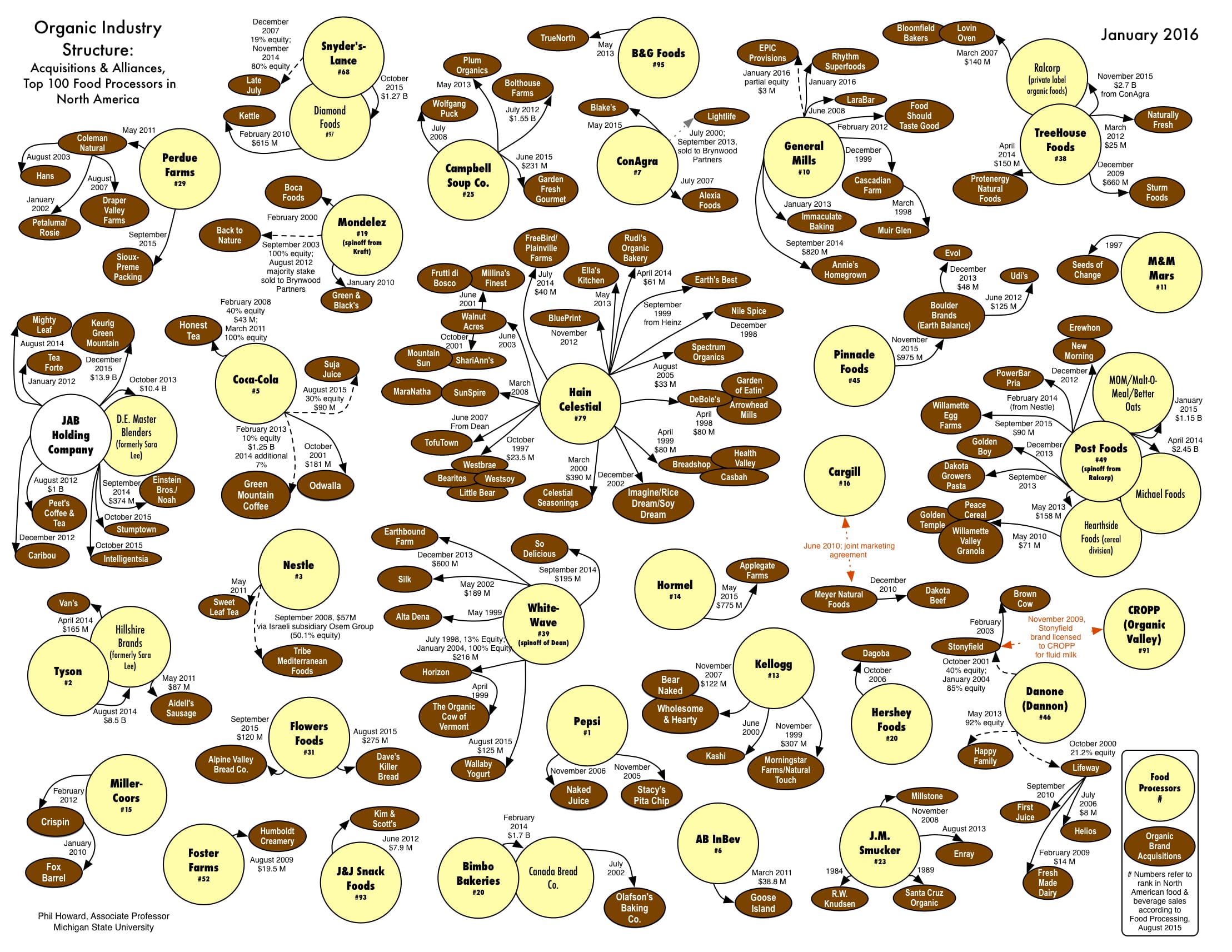
Here are some examples in case you aren’t up to date on the “who owns who” of the organic world of tainted food. Purdue Farms owns Hans. Coca Cola owns Suja juice, Green Mountain Coffee and Honest Tea. Not so “honest” anymore, huh? Campbell Soup Company owns Wolfgang Puck, Plum Organics and Bolthouse Farms. Nestle owns Sweet Leaf Tea and Tribe Mediterranean Foods. Pepsi owns Naked Juice and Stacy’s Pita Chips.
Wait, there are more. Hain Celestial owns Spectrum Organics, Garden of Eatin and Ella’s Kitchen, just to name a few. Kellogg owns Bare Naked, Kashi and Morningstar Farms. Did you know J.M. Smucker owns Santa Cruz Organic? You should also know that General Mills owns Muir Glen, Cascadian Farm, LaraBar and Annie’s Homegrown – the latter of which might not be so “homegrown” anymore.

#2. Buying organic foods that contain canola

Organic or not, canola oil is synthetic oil bred from its parent rapeseed. Big Food needed a cheap substitute for imported coconut oil and palm oil and bam! A creative Canadian scientist took the most toxic of all food-oil plants and reduced the toxicity to meet FDA “standards” (nothing to write home about). Canola oil is still toxic even when it contains zero pesticides, and that’s why it doesn’t matter if it carries the “certified organic” seal of approval from the USDA.
Studies of rats consuming canola revealed degeneration of the heart, kidneys, thyroid gland and adrenals. As soon as the scientists withdrew canola from the rats’ feed, the health damage rescinded. Don’t forget, humans are animals too, with 96 percent the same DNA as the rest of the animals on planet Earth, so don’t think this alarming canola research doesn’t apply to us. Canola oil is high in glycosides, which means it inhibits enzyme function and destroys the protective coating surrounding your nerves, and once that sheath is gone, you’re done for. Nerve damage sets in.
Canola oil, over the long term, can cause emphysema, constipation and respiratory distress. Don’t be fooled by the happy little term “expeller pressed.” It doesn’t matter because canola still carries the mutated rapeseed genes. Big Food still has to bleach it and deodorize it to remove the stink. Almost all organic mayonnaise products and organic salad dressings are loaded with canola or soy or both! Watch out.

#3. Buying organic foods that contain unfermented soy

Just since the year 2000, U.S. food manufacturers have introduced over 3,000 soy-based foods, many of which are labeled “certified organic,” but does that even matter? Any soy that is unfermented, whether organic or not, is linked to immune-system malfunctions, thyroid dysfunction and cognitive decline. In fact, no soy was fit to eat until the discovery of fermentation techniques during the Chou Dynasty. Anyone eating unfermented soy would suffer from eating anti-nutrient toxins that block the enzymes humans need for protein digestion, and that’s at just two tablespoons a day.
Hundreds of health studies reveal infant abnormalities, kidney stones and food allergies thanks to soy consumption. If you read or hear about the benefits of soy, they’re talking about fermented soy only. Most organic mayonnaise products and organic salad dressings are loaded with canola or soy or both! Watch out.

#4. Buying anything “certified organic” that was grown in China

With three times the population of America, China suffers major environmental pollution problems, including waste management, industrial and agricultural contamination, pharmaceutical contamination, plus inadequate water treatment. At least 70 percent of China’s water is so polluted it’s deemed unsafe for human contact. Some of the rivers there have such high metal content that they literally run red from rust. That means even if food is grown organically without pesticide use, it’s still contaminated across the board.

#5. Assuming that “USDA certified organic” means no heavy metal toxins

The USDA does not inspect certified organic food for heavy metal toxins at all. That would include lead, aluminum, mercury, nickel, copper, tungsten and arsenic. Can you believe it? You can have your levels tested by a Naturopathic Physician. Your best bet is to avoid all organic food that’s imported from China – the most polluted industrial nation in the world.

#6. Putting organic food in the microwave oven

The “nuker” not only destroys nutritive qualities of food within seconds, but produces wave energy radiation that interacts with food molecules, changing their polarity from positive to negative at millions of times per second. This severe agitation and friction bombards the food and forcefully deforms it. The scientific name for this is “structural isomerism.”

#7. Cooking organic meat on an outdoor grill

Even if meat is organic, when you grill it at high temperature and fat drips onto the heat source, potent carcinogens are created called polycyclic aromatic hydrocarbons (PAH’s). There is also a chemical reaction between the amino acids and creatine in the meat that forms dangerous heterocyclic amines (HCA’s). Lastly, you’re increasing the amount of advanced glycolytic enzymes (AGE’s) already present in the meat, causing inflammation and oxidative damage to tissues in your body.

#8. Boiling organic vegetables in water you got from the tap

You can’t boil out cancer-causing, IQ-lowering sodium fluoride from tap water. You need a high quality water filtration system like Big Berkey to do that. Don’t pollute your clean food with toxic tap water. Enough said.
Sources for this article include:
Cornucopia.org
NaturalNews.com
Koshland-Science-Museum.org
NaturalNews.com
FDA.news
News.BBC

read more: http://www.naturalnews.com/2017-08-23-top-8-organic-mistakes-most-people-make-because-they-have-not-done-the-research.html

Tuesday, March 28, 2017

Evidence EPA Colluded With Monsanto to Dismiss Cancer Concerns Grows Stronger

Thursday, March 16, 2017

Glyphosate was patented as an antibiotic … is this contributing to antibiotic resistance?

For decades, the environment – rivers, lakes, fields, humans, livestock and wildlife – has been exposed to the toxic effects of glyphosate, the active ingredient in the weed killer Roundup. The chemical, classified as a probable carcinogen by the World Health Organization in 2015, has been linked to kidney disease, liver damage, birth defects, cancers, Parkinson’s disease, non-Hodgkin’s lymphoma and more.
Plus, as if this situation weren’t outrageous enough, troubling news is emerging about one of glyphosate’s less well-known properties. It turns out that glyphosate is also an antibiotic, and has been registered as such by the most hated corporation in the world, Monsanto.

Shocking new study about glyphosate reveals an alarming prospect

The very concept of resistant bacteria – in which mutating microorganisms become immune to the effects of antibiotics – is the stuff of nightmares, with resistant bacterial infections exacting a very real toll. According to the CDC, MRSA – or methicillin resistant staphylococcus aureus – claims over 11,000 lives a year.
Now, add glyphosate to the list of substances that can fuel antibiotic resistance in bacteria. In a study conducted at the University of Canterbury, New Zealand, researchers found that exposure to common herbicides – such as glyphosate and dicamba – caused bacteria to change their response to antibiotics, allowing them to display increased resistance.
The results were so surprising that the researchers feared some sort of error or contamination had affected their results. They enlisted a colleague at a different university to conduct the same experiments – and the findings were reproduced.

Glyphosate seems to “target” beneficial bacteria

And the harm from glyphosate doesn’t stop with its contribution to antibiotic resistance.
Glyphosate kills plants by interfering with a system called the shikamate pathway that regulates the synthesis of amino acids. As apologists for Monsanto never tire of pointing out, the shikamate pathway doesn’t exist in humans. But it does exist in bacteria – including the beneficial bacteria on which we depend for synthesis of amino acids.
Natural health experts have long insisted that glyphosate exposure can cause depletion of the amino acids tyrosine, tryptophan and phenylalanine – thereby setting the stage for obesity, autism and depression, as well as neurodegenerative conditions such as Parkinson’s and Alzheimer’s disease.
Researchers know from studies on chicken and cattle that ingestion of glyphosate can destroy beneficial bacteria in the digestive tract, while leaving dangerous bacterial pathogens – such as salmonella and E. coli – unharmed. There is no reason to believe glyphosate isn’t causing the same harm to humans – giving rise to the current epidemic of gastrointestinal conditions such as irritable bowel syndrome, inflammatory bowel disease and leaky gut.
In an article published in the scientific journal Entropy, the authors concluded that glyphosate could be the most important factor in the development of multiple chronic diseases that have become prevalent in Western societies.

Glyphosate’s toxic history is marked by skyrocketing use on food crops

Glyphosate, which has been in use since the 1970s, was initially only sprayed on weeds. But with the development of genetically engineered, glyphosate-tolerant “Roundup Ready” crops, the herbicide is now sprayed liberally on food crops – with glyphosate use doubling between 2001 and 2007 alone.
In a sickening chain of contamination, animals ingest glyphosate-laden feed, and humans then consume the meat – often along with produce that has been sprayed directly with Roundup. In this way, an unprescribed (and unsafe) drug succeeds in making its way from stockyards and fields to your plate, probably several times a day.

Monsanto’s glib reassurances are ridiculous

Monsanto continues to insist that glyphosate is not toxic to humans, which is laughable enough. But the company’s defense against concerns about glyphosate residue fueling antibiotic resistance take the word “ridiculous” to new levels. You can read it for yourself here.
Claiming that it is routine for companies to patent for “reasonable “ potential uses, Monsanto goes to considerable lengths to point out that glyphosate, “when used as recommended,” is not “concentrated” enough to function as a clinical antibiotic.
First, note the sanctimonious use of the disclaimer “when used as recommended.” As demonstrated by the heartbreaking accidental pesticide poisoning of four Texas children in January, chemicals are not always “used as recommended.” Human error, accident and mishap are an unfortunate reality.
Monsanto insists that the concentrations aren’t high enough to make glyphosate “clinically effective” as an antibiotic – but is clinical effectiveness even the point? Who knows at what concentration bacteria begin to develop resistance? Does anyone feel like gambling?
It’s worth nothing that a recent animal study showed that liver damage resulted from amounts of glyphosate that were many times lower than that allowed in tap water for human consumption. If damage can occur at those low levels, why not antibiotic resistance?

What you can do to reduce your exposure to glyphosate

The first step, of course, is avoiding the use of Roundup on your lawn and garden – and encouraging others to bypass it as well.  Say “no” to processed foods, “fast food” and junk food. Opt for grass-fed meat, pastured poultry, and certified organic products – which are guaranteed to be free of toxic pesticides and GMOs.
Glyphosate – a carcinogen, toxin, endocrine disruptor and DNA mutagen – has now been revealed as an antibiotic. And, the infuriating fact is: we’ve all been used like guinea pigs for this noxious chemical experiment.
References:
http://sustainablepulse.com/2015/03/24/new-study-shows-roundup-herbicide-causes-antibiotic-resistance-in-bacteria/#.WMUMkVXyvIV

Read more: http://www.naturalhealth365.com/glyphosate-roundup-2170.html

Saturday, January 21, 2017

The Truth About Monsanto You Need to Know

By Andrew Kimbrell, Center for Food Safety
Most of us have told a lie a time or two and probably a variety of them. For example, there is the excuse lie as in the timeless “my dog at my homework,” and the proverbial “white lie” as in “No you really do look great in those jeans.”
But the “The Big Lie” is different. The term refers to a propaganda or advertising technique by which first you say the opposite of an obvious truth about an event or product, and then keep repeating and repeating that lie until it becomes an unquestioned mantra for the public. So no matter how much the lie defies common sense it over time becomes commonplace.
Take the iconic marketing campaign promoting Coca Cola. You’ll easily recall the endlessly repeated mantra: “Coke, it’s the real thing.” Well, whatever you may think of Coke, not much in my estimation, it is anything but the real thing. It’s highly processed, is laden with high fructose corn syrup derived from GMO corn, contains caramel coloring and it goes downhill from there. So the ad is obviously the exact opposite of the truth. But repeated countless times the slogan becomes accepted without thought.
Here’s another favorite example, the AT&T telephone ad campaign, “Reach out and touch someone.” Certainly phones can be great but as anyone separated from a loved one knows, to their great frustration, the one thing you can’t do with them is actually reach out and touch that important someone. You are actually just touching the dial pad and handset. Again, a mantra that is obviously false but was repeated so often it almost made sense.
Similarly, for more than two decades the promotion of genetically engineered (GE) crops in the United States and worldwide has been based on the Big Lie. Led by Monsanto’s aggressive international marketing campaign the mantra has been, and still is, that GE crops “reduce pesticide use, increase yield and are key to feeding the world.”
I have been working on this issue for decades and during that time have seen that virtually every major media story on GE crops began with this “Big Lie” claim, and using almost identical language. These claims, as with those in the Coke and AT&T commercials, defy common sense.
Monsanto and the other leaders in promoting GE crops—Dow, Dupont, Syngenta and Bayer—are all chemical companies that make tens of billions of dollars in profits by selling ever more pesticides, especially herbicides. Why would they spend hundreds of millions of research dollars and then billions in advertising and lobbying to promote crops that actually “reduce pesticides” and thereby destroy their bottom line?
Are these companies committing economic suicide in an altruistic attempt to feed the world? Obviously not. You can accuse Monsanto of many things, including myriad corporate crimes over many decades, but altruism is not one of them. As my organization and many others have scientifically demonstrated many times to a deaf media, the vast majority of GMOs are not designed to decrease herbicide use but to massively increase it.
More than 90% of US corn, soy, cotton, and sugar beets have been genetically engineered to withstand massive doses of the toxic herbicides these companies make, and profit from. Normally care has to be taken using herbicides because they kill not just weeds but anything green, including the crops they come into contact with. But with these herbicide tolerant crops large-scale operations can even conduct aerial spraying of their fields with these herbicides and the weeds die but the crops survive.
Because of GE crops, each year, more than 100 million more pounds of Roundup are used on America’s croplands each year. These toxic chemicals pollute our water and air, kill wildlife and native plants and threaten the very survival of the monarch butterfly and other species. In 2015, the World Health Organization’s research arm found that the active ingredient in Roundup is a “probable carcinogen.” So for Monsanto and the other chemical companies, genetically engineering crops is just another way to significantly increase profits. They sell the seeds and the poisons sprayed on those seeds. Great for their bottom line, terrible for the rest of us and the planet.
What about the Big Lie about increased yield and feeding the world? Well in 2009 the Union of Concerned Scientists published a definitive report called “Failure to Yield,” which made it clear that there was no significant yield increase with GE crops. Despite the clear title and message the media entranced with the Big Lie barely noticed.
But as Martin Luther King, Jr. liked to say, “No lie can live forever.” And in the waning weeks of the recent contentious and dispiriting election campaign, a surprising ray of light illuminated the longstanding GE crops debate. Remarkably, the source was the New York Times, which for so many years had ignored the science about genetic engineering and bought the Big Lie. But in a front-page story, the Times became among the first mainstream media sources to debunk the Big Lie about GMOs.
The newspaper story was based on research comparing pesticide use and yield between the United States, where genetic engineering has dominated major crops, and Western Europe, which did not embrace the technology. They found that overall the use of herbicides such as Monsanto’s Roundup had increased by more than 20% in the United States since the introduction of GE crops, while during the same time period herbicide use in France, Europe’s biggest crop producer, had not only not increased but actually decreased by 36 percent.

Read more: https://foodrevolution.org/blog/food-and-the-environment/monsanto-gmos-truth/?utm_campaign=frn16&utm_medium=email&utm_source=email-automated&utm_content=2335&utm_term=existing-email-list&email=subzerohc%40yahoo.com&firstname=John&lastname=Zahos

Wednesday, December 14, 2016

The First Sustainable Urban Agrihood in the U.S. Could Serve As A Model for Urban Development

Could fresh, healthy, affordable food be the future of urban neighborhood development?
In Detroit, Michigan, “the first sustainable urban agrihood” in the U.S. centers around an edible garden, with easily accessible, affordable produce offered to neighborhood residents and the community.
Each year, this urban farm provides fresh, free produce to 2,000 households within two square miles of the farm. They also supply food to local markets, restaurants, and food pantries.
The concept of agrihoods isn’t new —the Urban Land Institute estimated that about 200 agrihoods had been or were under construction across the U.S. — but this agrihood is unique because it’s the first truly urban agrihood. It plans to operate in a sustainable way, and is more accessible than most other agrihoods.
Agrihoods, also called agritopias or community-supported development, are an exciting concept because they create a remarkable improvement to the dominant food system.
They help tackle food insecurity and other community problems. They make it easy for people in low-income communities to get fresh, healthy food. And they give people a connection with the food they eat, the earth, and each other.

All about the first sustainable urban agrihoodSustainable Urban Agrihood in Detroit

The first sustainable urban agrihood, which recently debuted in Detroit, is the project of the Michigan Urban Farming Initiative — an all-volunteer nonprofit, which seeks to empower urban communities using sustainable agriculture.
The three-acre development has vacant land, along with occupied and abandoned homes centered around a two-acre urban garden, with more than 300 organic vegetable varieties, like lettuce, kale, and carrots, as well as a 200-tree fruit orchard, with apples, pears, plums, and cherries, a children’s sensory garden, and more.
The nonprofit is also working on other projects that go beyond farming, including:
  • Turning a long-vacant building into a community resource center, which will offer educational programs, event and meeting space for the neighborhood, a nonprofit incubator, and two commercial kitchens
  • Developing a healthy food cafe, and  
  • Restoring a home into student intern housing and an off-grid shipping container.
Other projects to make the place more sustainable include:

Saturday, July 9, 2016

How the Ancient Maya civilization cultivated organic crops using herbal medicine to combat pests

With such widespread use of pesticides on crops throughout the world, and the insistence of Big Agri and some farmers that its products are necessary for successful crop cultivation, one might start to wonder exactly how people managed to grow enough food to survive before this relatively modern poison took root.

Some clues can be found in the agricultural methods used by the Mayan people. Ancient Mayans viewed corn as a gift from the gods, and great care was taken in its cultivation. As a result, corn has been considered one of the most successful and effective self-sustaining cultivation systems on the planet for thousands of years.

The knowledge gleaned from millennia of experience could be used to help with growing organic crops today. The Yucatan Times reports that one of the keys to their success is their extensive knowledge of "photoperiods," which are the times of day when the plants are exposed to sunlight.

By taking into account the solar and lunar seasons, as well as these photoperiods, better blossoming can be achieved, thereby spurring better yields of vegetables and fruits.

Natural pesticides taken from herbal medicine

Moreover, the Mayan culture boasts a very thorough knowledge of herbal medicine. This is something that is not only applied to natural healing, but also to pest and fungus control on crops.

For example, the neem tree (Azadirachta Indica) has a lot of applications. This fast-growing tree can reach as tall as 20 meters, and its leaves can treat a host of diseases. Cholesterol, hypertension and diabetes are just a few of the illnesses it can help with. It also boasts antibacterial qualities, which means it can help with skin issues and can even help rid the body of impurities.

Its uses in crop cultivation are every bit as impressive. In fact, it has proven to fight one of the most dangerous threats to the cultivation of produce: the white fly.

Up to 90 percent effective

Neem is remarkably powerful when it comes to controlling insects, with one of its components, azadirachitin, believed to be as much as 90 percent effective in pest control. This chemical can be found not only in the leaves of the tree, but also in its wood and seeds. It does not cause instant death like chemical pesticides. Instead, it repels insects and serves as an anti-feedant, essentially causing the insects to prefer starving to death over eating the plant that has been treated with neem. If they eat it anyway, the neem will have a contraceptive effect, thereby interrupting their life cycle by ensuring they do not lay eggs.

Plants that have been treated with neem are safe for beneficial insects like butterflies and bees, and insects must actually have fed on the plant tissues in order to be affected.

Another benefit of using neem is that it is biodegradable, which means it will break down quickly and easily. Unlike chemical pesticides, it does not harm birds, mammals or earthworms.

Neem's insecticide action can replace the use of pesticides and chemicals, ensuring that the produce is not contaminated. The Mayans combine this with their mastery of soil preparation and composting to yield impressive results.

Mayan researcher and culture expert Caamal Itza believes that this traditional knowledge should be disseminated and preserved in order to help promote food production methods that are kinder to the environment.

As the demand for organic produce continues to rise, now is an excellent time for some of these methods to garner a closer look. After all, why would anyone in their right mind want to buy produce that was doused in chemicals known to cause cancer, when they could choose options that were grown with natural pesticides?

Sources include:


TheYucatanTimes.com

NaturalNews.com

Science.NaturalNews.com

Read more: http://www.naturalnews.com/054596_natural_pesticides_Mayans_agriculture.html

Friday, June 10, 2016

RECIPES: Three No-Bake, Cool, Refreshing, & Healthy Desserts… Just In Time For Summer!

There is a way to treat yourself without poisoning your body with refined sugar, processed flours, corn syrup and other nasty ingredients found in most desserts! In all honesty, you can avoid these ingredients for the rest of your life and still enjoy eating delicious sweet treats – and it all comes down to the ingredients!
Simply choose desserts that are made from ingredients like nuts, dates, and maple syrup, which are full of vitamins and minerals that provide nutrition to the body. At the same time avoid processed cane, corn, or beet sugars and flours that have been chemically stripped of nutrition. When you indulge in these types of ingredients, they don’t do your body any favors! You also make your body more acidic, because sugars devoid of minerals are acid-forming – and we know that it’s better to eat mostly alkaline foods if we want to avoid disease.
That’s not to say that you should go crazy and eat an entire pan of almond butter brownies… but if you are going to treat yourself this is the way to do it!

Today, I’m going to show you how to make this delicious spread of healthy desserts without even turning on your oven! Yum!

new3-No-bake-Healthy-Desserts

1. BLUEBERRY “CHEESECAKE” BARS

These bars are made without any dairy at all but taste like cheesecake! They are cool and refreshing and make a fantastic summer treat!
Blueberry Cheesecake Bars Prep
Blueberry Cheesecake Bars
4.8 from 4 reviews
Food Babe's Blueberry “Cheesecake” Bars
 
Prep time
Cook time
Total time
 
Serves: 9
Ingredients
  • 2 cups raw cashews, soaked overnight
  • ⅓ cup raw honey or maple syrup
  • ¼ cup coconut oil, melted
  • ¼ teaspoon ground cinnamon
  • 2 tablespoons lemon juice
  • 1 cup blueberries
Crust:
  • 2 cups walnuts
  • 10-12 medjool dates
  • 2 tablespoons coconut oil
  • Pinch sea salt
Instructions
  1. To make the filling, place the cashews, honey, coconut oil, cinnamon, lemon juice and blueberries in a blender and blend until smooth.
  2. To make the crust, place the walnuts in a food processor and pulse until finely chopped. Add the dates and salt and pulse until well combined. Add coconut oil and pulse once more.
  3. To assemble, line a 8x8 baking pan with parchment paper. Firmly press the crust into the pan to create an even layer. Add the filling and spread evenly over the crust. Place in the freezer for at least 3 hours or overnight.
  4. To serve, cut the “cheesecake” into squares and serve with fresh berries, if desired. Enjoy!
Notes
**Please choose organic ingredients if possible.**

2. SALTED CARAMEL BROWNIES

You can make an amazing “caramel sauce” with just almond butter, maple syrup, and vanilla extract. And it tastes so delicious drizzled over these refrigerator brownies!
Salted Caramel Sauce
Salted Caramel Brownies
4.8 from 4 reviews
Food Babe's Salted Caramel Brownies
 
Prep time
Cook time
Total time
 
Serves: 9
Ingredients
  • 1 cup walnuts
  • 1 cup almonds
  • ½ cup cacao powder
  • ⅛ teaspoon sea salt
  • 10-12 dates
  • 2 tablespoons coconut oil, melted
  • 2 tablespoons maple syrup
  • 1 teaspoon vanilla extract
Caramel Topping:
  • 3 tablespoons almond butter
  • 1-2 tablespoons raw honey or maple syrup
  • ½ teaspoon vanilla extract
  • Pinch sea salt
Instructions
  1. Place the walnuts and almonds in a food processor and pulse until finely chopped. Add the cacao and salt and pulse to combine. With the food processor running, add the dates, one at a time until they are all combined. Add the coconut oil, maple syrup and vanilla.
  2. Line a 8x8 baking pan with parchment paper and place the brownie mix in the pan. Press down to form an even layer.
  3. To make the caramel topping, whisk together the ingredients in a small bowl. Drizzle some of the caramel topping over the brownies and place the pan in the refrigerator for 2-3 hours to set. Cut into squares and enjoy!
Notes
**Please choose organic ingredients if possible.**

3. STRAWBERRY CHIA JAM WITH YOGURT AND PISTACHIO CRISP

The pistachio crisp on this treat is the bomb! It’s like a crunchy, sweet and nutty candy that goes perfect with chia jam and yogurt. This dessert is sweet and creamy, and makes a nice alternative to ice cream!
Yogurt Pistachio Crisp (3 no bake healthy desserts)
4.8 from 4 reviews
Food Babe's Strawberry Chia Jam with Yogurt and Pistachio Crisp
 
Prep time
Cook time
Total time
 
Serves: 2
Ingredients
  • 16 ounces plain yogurt
Chia Jam:
  • 1 cup fresh strawberry, hulled
  • 1 tablespoon chia seeds
  • 1-2 tablespoons fresh orange juice
  • honey or maple syrup, to sweeten if desired
Pistachio Crisp:
  • ¼ cup chopped pistachios
  • 2 tablespoons chia seeds
  • 1 tablespoon sesame seeds
  • Pinch sea salt
  • 2 teaspoons raw honey
Instructions
  1. To make the chia jam, place the strawberries in a blender and blend until smooth. Add the chia seeds, orange juice and sweetener, if using. Blend to combine. Place in a glass jar in the refrigerator to allow the chia seeds to expand, at least 1 hour.
  2. To make the pistachio crisp, Place a saute pan over medium heat. Add the pistachios, chia seeds and sesame seeds and toast lightly, 1-2 minutes. Drizzle the honey over the nuts and seeds and stir so they begin to form clumps. Take off the heat and let cool.
  3. To serve, place 8 ounces of yogurt in a bowl and top with 1-2 tablespoons of chia jam and some of the pistachio crisp. Enjoy!
Notes
**Please choose organic ingredients if possible.**
Check out my yogurt buying tips here.

If you know someone who is tired of the summer heat and would love to cool down with some delicious no-bake treats like these, please share this post with them! 

Xo,
Vani
P.S. If you are looking for more recipes and healthy meal plans – you gotta check out the Food Babe Eating Guide – it may just be what you need this Summer to stay on track! Check it out here.

Tuesday, May 3, 2016

Many Surprising Foods Found to Contain Monsanto's Deadly Poison

Wednesday, April 20, 2016

Quaker instant oatmeal and Silk non-GMO soy creamer found contaminated with alarming levels of glyphosate weed killer... and they're not even GMO!

According to glyphosate laboratory testing conducted at Microbe Inotech Laboratories, Inc., in St. Louis, the Quaker Instant Oatmeal (Strawberries and Cream) sample tested at the lab contains an astonishing 1,327.1 ppb (parts per billion) of glyphosate weed killer.

The test results, achieved via the ELISA methodology (enzyme linked immunosorbent assay), are astonishing for two reasons:

1) They are extremely high, far surpassing the levels of glyphosate that have so far been detected in other foods.

2) Oats are not GMO! While glyphosate might be expected at some concentrations in GM soy and other herbicide resistant crops, very few people are aware that glyphosate is being routinely sprayed on wheat, barley and oat crops as a powerful desiccant, right before harvest.

Organic brands were far cleaner

By comparison, Nature's Path Organic Instant Oatmeal -- produced by a cereal company that meticulously avoids GMOs and toxic agricultural chemicals -- showed a final test result of "less than 75 ppb" which could mean essentially zero. For grains, anything below 75 ppb is below the LoD (Limit of Detection) for the ELISA methodology.

The testing was commissioned by the Alliance for Natural Health (ANH-USA), which tested 24 popular breakfast foods and found glyphosate concentrations in 11 of those samples. ANH-USA has also released a video on the subject, entitled "Are You Eating Glyphosate For Breakfast?" (The answer is probably YES...)

"We decided to do this testing to see just how ubiquitous this toxin has become in our environment. We expected that trace amounts would show up in foods containing large amounts of corn and soy," explained Gretchen DuBeau, executive and legal director of ANH-USA. "However, we were unprepared for just how invasive this poison has been to our entire food chain."

See the brand names of the products that tested positive for glyphosate

ANH-USA results, found at this link, use generic descriptors of food samples, without their brand names. But Natural News can now exclusively report the brand names behind these foods which tested positive for glyphosate, according to lab results provided to Natural News:

1327.1 ppb - Quaker Instant Oatmeal, Strawberries and Cream
491.9 ppb - Thomas's Whole Wheat Bagels
151.5 ppb - Rudio Multibagels
403.0 ppb - Pepperidge Farm Whole GrainBread, 100% Whole Wheat
136.4 ppb - Dave's Killer Whole Wheat Bread
34.4 ppb - OreIda Hash Brown Potatoes
24.1 ppb - Russet Potato
260.6 ppb - Cream of Wheat Hot Cereal Whole Grain
104 ppb - 365 Coffee Creamer
86 ppb - Original Silk Soy Creamer Non GMO

In addition, results of over 100 ppb were also found in eggs, but extracting glyphosate from eggs hasn't yet been validated with the ELISA method, so we're not including those results here.

Silk, Whole Foods' 365, Pepperidge Farm, Thomas's and other brands all named

Many consumers will be extremely surprised -- perhaps "shocked" is a better descriptor -- to learn that "Silk" brand non-GMO soy creamer still contains glyphosate, according to these test results.

Whole Foods' 365 brand was also found to contain a significant concentration of glyphosate, as was Cream of Wheat hot cereal, which is mostly made of wheat (which is also non-GMO).

Thus, the disturbing upshot of these tests is that even non-GMO crops can be saturated with glyphosate weed killer chemicals. This includes oats, wheat, barley and other crops.

Glyphosate is currently listed as "probably carcinogen" by the IARC -- meaning these health experts believe there is credible evidence that it causes cancer. Click here for the IARC's report and conclusions.

Because of its toxicity, glyphosate is being aggressively outlawed by various countries around the world such as The Netherlands and Sri Lanka, to name a few.

The European Union has publicly stated that glyphosate herbicide formulates are "genotoxic," while Monsanto, which sells glyphosate branded as "Roundup," is running an entire department of propagandists and professional muckrakers whose job is to discredit anyone who disagree with industry propaganda.

Monsanto propagandists include the globally reviled Jon Entine, a paid disinfo shill and industry propagandist whose job is to spread lies and disinformation about GMOs in much the same way Big Tobacco once declared cigarettes didn't cause cancer (and weren't addictive, either). Natural News exposed Jon Entine as a violent sociopath, after which he was fired from Forbes.com, which also functions as an industry propaganda front group for Big Biotech and Big Pharma.

Campbell's recently announced it would label GMOs in its foods. Mars, Inc. soon followed, as did, reluctantly, General Mills.

Learn more about glyphosate news at Glyphosate.news, a Natural News content property.

Sources for this story include:
http://www.anh-usa.org/glyphosate-for-breakf...

http://www.anh-usa.org/wp-content/uploads/20...

http://www.iarc.fr/en/media-centre/iarcnews/...

http://www.naturalnews.com/049830_Netherland...

http://www.naturalnews.com/050009_sri_lanka_...

http://www.naturalnews.com/052065_glyphosate...

http://www.naturalnews.com/049637_Monsanto_p...

http://www.naturalnews.com/047665_Jon_Entine...

http://www.naturalnews.com/053381_General_Mi...

http://glyphosate.news

Saturday, March 5, 2016

Syngenta asks EPA to raise insecticide limits while scientists develop robots to replace bees decimated by chemicals

Around 95 percent of corn and 70 percent of soy grown in the US and Canada is cloaked in either clothianidin or thiamethoxan. Both chemicals are from a class of insecticides called neonicotinoids. Similar to nicotine, neonicotinoids bind to nicotinic acetylcholine receptors in the cells of the central nervous system. In insects, this triggers a suppressive and deadly response at the cellular level.

In the rush to protect crops from insect damage, scientists have neglected one important detail. The neonicotinoid insecticides can be absorbed into the plant. As the plant matures, the chemical can be transported throughout the plant, most importantly, into the pollen. Over time, pollinators like honeybees can be weakened and compromised. Massive bee die-offs have been occurring around the world where neonicotinoids are heavily used. Without pollinators, all sorts of plants suffer -- especially key vegetable crops and wild herbs. Honeybees pollinate about one-third of the world's food. Without them, $15 billion in agricultural production would be lost each year.

Tiffany Stacker of E&E reported, "Scientists say neonicotinoids can suppress bees' immune systems, making them more vulnerable to viruses and bacteria. The Fish and Wildlife Service agreed to phase out neonicotinoids on wildlife refuges nationwide starting in January 2016."

The insecticides are so catastrophic that the European Union banned the use of them two years ago after validating a study linking neonicotinoids to honeybee colony collapse disorder.

Syngenta wants to raise insecticide limit from 0.1 ppm to 4.9 ppm - a staggering increase

Disdainfully, chemical giant Syngenta has recently asked the US EPA to lift current restrictions on their insecticides, asking regulators to increase the allowable level of thiamethoxan to 4.9 parts per million. The EPA's current allowable level is 0.1 ppm. Syngenta is basically asking the federal government to approve more than 40 times the amount of insecticide in the environment! This type of increase would speed up bee die-offs tragically, probably wiping 90 percent or more of their population from affected ecosystems within the next decade.

That wouldn't necessarily be a bad thing for the biotechnology-chemical industry. As always, they create a problem and then invent a solution, while the natural world is destroyed in the process. Their solution for having no bees on the planet is simple: develop robot bees.

Scientists develop robot bees to replace bees destroyed by insecticides

At Harvard University, the RoboBee is already up and flying, flapping its wings at 120 times per second. Engineering professor Robert Wood introduced the new robotic bee just a year ago and envisions an entire team of them pollinating fields in the next decade. The bees wouldn't be able to produce raw medicinal honey or propolis. They would simply just pick up and lay down pollen.

"RoboBees will work best when employed as swarms of thousands of individuals, coordinating their actions without relying on a single leader," Wood and his colleagues wrote in Scientific American. "The hive must be resilient enough so that the group can complete its objectives even if many bees fail."

The project is a breakthrough for micro aerial vehicles, but the tiny bots are still unable to communicate with one another or fly on their own. The current model has to be driven by a person. The challenge that the developers now face is fitting flight muscles, sensors and a battery on the robot bee without it weighing more than a gram.

Inventing profitable problem-solution monopoly while destroying Earth

While the RoboBee "solution" could potentially help recover lost pollinators in the natural world, it would overshadow the root problem of an agricultural system dependent on chemicals that are quietly destroying the world and bringing down the entire food system.

This is exactly how herbicide-resistant genetically modified crops work too. Engineered herbicide-resistant crops create the need for more herbicides, thus creating more need for profitable, patented seeds.

What's really happening at this moment in history is corporations are destroying the natural world for profit and forcing people to be dependent on the technological "fix." In this way, science is not progressing mankind but instead stripping him of his humanity and destroying his sacred connection to Earth.

Sources for this article include:

http://www.thedailysheeple.com

http://www.businessinsider.com

http://www.topsecretwriters.com

http://www.scienceworldreport.com

http://www.beyondpesticides.org

http://www.cell.com

Sunday, February 7, 2016

Healthy Chocolate Chip Sweet Potatoe Cookies (NO Sugar, NO Flour)

There’s nothing like the smell of freshly baked cookies. However, many store-bought varieties today are loaded with unhealthy amounts of sugar, preservatives, and processed grains. This is why it’s better to bake your own cookies at home.
Mercola.com reader Meg Brock shares her Real Food Cookies recipe, which doesn’t use sugar and flour. It’s a healthy alternative to a snack time favorite!
Ingredients
  • 1 cup mashed sweet potato, cooked (leftovers work well)
  • 2 large ripe bananas (use 3 if your bananas are small)
  • 1 16-oz. jar of unsalted and unsweetened cashew butter
  • 4 large eggs
  • 2 teaspoons pure vanilla
  • ¼ teaspoon salt
Optional add-ins: Bittersweet chocolate chips and/or unsweetened shredded coconut.
Procedure:
  1. Preheat oven to 400 degrees F.
  2. Put all of your ingredients (except for any add-ins) into a food processor. Mix on high until the batter is smooth (at least 30 seconds).

    You will need to stop at least once to scrape down the sides of the bowl.

  3. Transfer the batter to a large bowl, and stir in any add-ins by hand.

    You can use 1 cup of bittersweet chocolate chips and ½ cup of unsweetened shredded coconut.

    Use whatever you like or nothing at all.

  4. Drop the cookie dough/batter onto a parchment-lined baking sheet, leaving about 2 inches of space between each cookie.
  5. Bake for 15 to 16 minutes. You will need to watch the cookies closely at the end. You want them to be golden brown without burning.

    The longer you cook them, the crispier they will be. Cool them on a wire cooking rack.
This recipe makes 45 cookies.
 
 
Note: These cookies taste best the same day they are baked. However, if you plan to make them ahead of time, you can store them for days in the fridge (where they will turn soft). When you are ready to eat or serve them, reheat in a 350 degree F oven for about 10 minutes. This will make them crispy again. They also freeze well. Defrost them overnight in the fridge and reheat in the oven for 10 minutes.

Why Real Food Cookies Is Good for You

Sweet potatoes are a good substitute for flour because of its vitamins and minerals. Beta-carotene, responsible for the potato’s orange hue, lessens your risk of heart disease and cancer, improves your immune system, and fights free radicals. However, make sure to eat sweet potatoes in moderation, especially if you’re insulin or leptin resistant, as these contain high amounts of fructose.
Another health boost comes from bananas because of the high potassium content, which can help control your heart rate and blood pressure levels. Bananas also help with combatting infections, promoting bone health, and protecting the heart. But just like sweet potatoes, bananas contain fructose, so don’t eat too much, especially if you’re insulin–or leptin–resistant.
For the eggs, opt for organic and pasture-raised. I place a premium on this type of egg because some eggs nowadays come from confined animal feeding operations (CAFOs), where chickens are kept in horrible and cramped cages and fed with artificial ingredients. What’s worse, bacteria like salmonella can thrive in these environments — truly a disaster in the making.
Meanwhile, organic pasture-raised eggs are nutritionally superior because they contain higher amounts of vitamins A and E, omega-3s, and beta-carotene. This is because the chickens were able to roam around clean pastures and eat their natural diet of seeds, green plants, insects, and worms instead of processed feeds, resulting in healthier, fresher eggs.

Source: http://recipes.mercola.com/real-food-cookies-recipe.aspx?e_cid=20160207Z1_DNL_art_2&utm_source=dnl&utm_medium=email&utm_content=art2&utm_campaign=20160207Z1&et_cid=DM97521&et_rid=1346261814

Friday, January 8, 2016

FDA has known processed meat causes cancer since the 1970s, but continues to cover up truth to protect meat industry

They're added to nearly every processed meat product sold in the U.S. today – nitrites and other synthetic curing chemicals that the Food and Drug Administration (FDA) says are safe to use for keeping meat products from spoiling too quickly. But an investigation by researchers from the University of Wisconsin has uncovered that, despite years of denial, the FDA has known since at least the 1970s that nitrites cause cancer, and yet continues to pander to the meat industry in allowing their use.

Meat curing has been around forever, with the historical record showing that this process allowed ancient cultures to preserve meats for extended periods of time, especially during periods of food scarcity. People didn't have refrigerators back then, remember, so they had to come up with novel ways of food preservation that would get them through harsh weather conditions and other volatile environmental factors.

The fact that people have been curing meats since time immemorial isn't necessarily a problem. Salt, after all, is a natural curing agent that, in and of itself, isn't harmful. It's when salt is transformed through synthetic chemical alterations – in this case, as nitrites – that it becomes harmful. And these same nitrites, according to independent scientists, have been the subject of intense debate over the years concerning their safety.

Sodium nitrite linked to leukemia, cancer

Sodium nitrite, one of the most popular curing chemicals found in processed meat products today, contains certain nitroso compounds that, under the right conditions, can transform into cancer-causing nitrosamines. Even at the time when sodium nitrite was first offered up for commercial approval in the 1970s, it was recognized that nitrosamines come with serious health risks, including the threat of leukemia and other forms of cancer.

The debate over whether or not to approve sodium nitrite in the 1970s was centered around the chemical's known carcinogenicity, and the fact that other, safer curing compounds were already readily available. Nitrite opponents did what they could to present sound science that highlighted all this, which they believed would win the FDA over in rejecting sodium nitrite in favor of safer alternatives.

But the FDA ultimately capitulated to the meat lobby, which saw dollar signs rather than people's health as being the priority. Synthetic nitrites, after all, are cheap to produce, they preserve the inherent color and flavor of meats, and most people don't even know they're there – unless, of course, they develop a serious health condition as a result of consuming them.

Naturally-occurring nitrites aren't harmful

Not to be confused with naturally-occurring nitrites, which aid in the body's normal regulation of blood pressure, immune response and more, synthetic nitrites have an almost opposite effect on the body, damaging the normal function of hemoglobin and possibly even causing brain damage, particularly in young people.

"Nitrite changes the normal function of hemoglobin, which carries oxygen in the blood to the rest of the body, into a form called methemoglobin that cannot carry oxygen," explains the New Hampshire Department of Environmental Sciences.

"In severe, untreated cases, brain damage and eventually death can result from suffocation due to lack of oxygen."

Dietary nitrites, on the other hand, offer many protective benefits, including their ability to spur production of nitric oxide in the body. Nitric oxide helps regulate blood pressure, boost immunity, aid in wound repair, and improve neurological function, among other benefits.

"[T]he normal production of nitric oxide and nitrite may prevent various types of cardiovascular disease including hypertension, atherosclerosis, and stroke," explains the University of Wisconsin report.

This is why purchasing only nitrite-free meats, or meats that contain only naturally-occurring nitrites from vegetables like celery, is critical for your long-term health. Reading food labels and making smart purchasing decisions will go a long way in protecting you and your family against cancer and other forms of chronic illness.

Sources for this article include:

MapleLeafFoods.com

DES.NH.gov

Thursday, December 24, 2015

How to make pemmican - a nutritious superfood for survival that lasts decades

It may come as a surprise to learn that the most nutritionally-complete food on the planet is not only easy to make at home, but can also be stored unrefrigerated for many years without spoiling.

Dubbed the "original MRE," or, "Meal, Ready-to-Eat," pemmican is a survival superfood that was developed by Native Americans many centuries ago. It contains everything the body needs to sustain itself in a healthy fashion for an extended period of time.

Pemmican consists primarily of powdered dried meat mixed in equal amounts with rendered animal fat. The early Americans used meats such as buffalo and elk; today, pemmican is typically made with beef. We suggest using grass-fed meat, as animals fed in this manner are raised significantly more humanely.

The Native Americans were also known to mix in a small amount of dried berries (around five percent -- by weight -- of the total ingredients).

Pemmican: Enjoyed by early settlers, still provides health benefits today

The Pemmican Manual, by Lex Rooker, contains a wealth of information on the subject, from the history of its use by early settlers to recipes for making pemmican at home.

"When pemmican was discovered by our early Frontiersmen (explorers, hunters, trappers, and the like) it became a highly sought after commodity. The Hudson Bay Company purchased tons of pemmican from the native tribes each year to satisfy the demand," Rooker explains. "The basic unit of trade was an animal hide filled with pemmican, sealed with pure rendered fat on the seams, and weighed about 90 pounds. As long as it was kept away from moisture, heat, and direct sunlight, it would last for many years with no refrigeration or other method of preservation."

Those frontiersmen knew a good thing when they saw it. Pemmican was ideal for travel and for stockpiling a source of highly-concentrated nutritious food during lean or cold periods.

The same considerations apply today. For surviving a SHTF scenario, you'll need portable, high-energy rations that can be stored indefinitely.

There are a few variations on the theme, but most recipes for pemmican follow the same basic methods.

How to make pemmican at home

First, you'll need to dehydrate your meat (and berries, if you want to add them. Keep in mind berries are prone to spoilage and may shorten the shelf life of the pemmican; it may be worth replacing them with another healthy item such as cinnamon). Use a food dehydrator or an oven at its lowest setting to slowly dry out these ingredients.

Rooker warns of being careful not to overheat the meat, saying that lean meat should be dehydrated below 120 degrees Fahrenheit, ideally staying between 100 and 115 degrees Fahrenheit. Temperatures that are too high will cook the meat too much and take away from the nutritional value.

Once you've dried the meat, grind it into a powder and add in the dried berries, if desired.

Next, you must render the fat. You can use tallow (rendered from beef or mutton) or lard (from pork). When doing this on a stovetop, simply heat the ground fat by simmering and stirring occasionally. Then strain the liquid that ultimately forms into a mason jar using a cheesecloth or coffee filter.

Once the fat is rendered and strained, it can be mixed with the dried meat and shaped into balls or set into a mold. The trick is to not use too much fat or the pemmican may eventually turn rancid; add just enough to thoroughly moisten the mixture and bind everything together.

Why not try some variations on the theme?

Honey, which yields a similar shelf life, can be used in place of animal fat. Adding some spices, such as cumin with black pepper, may also be tasty addition to this recipe.

Long-lasting nutrition for active people, SHTF situations

As Rooker notes, pemmican is the perfect food for someone on the move. It's also ideal for possible SHTF scenarios.

"Ten pounds of pemmican will easily sustain a backpacker for a full week providing 1 1/2 pounds of pemmican per day which would supply 4,400 calories -- enough to support strenuous climbing at high altitude and in cold weather." He adds, "The same 10 pounds of pemmican would supply food for two full weeks of leisure camping activities at 3/4 pound per day providing 2,200 calories."

Sources for this article include:
http://tacticalintelligence.net
http://www.traditionaltx.us [PDF]
http://www.askaprepper.com

Saturday, December 19, 2015

New multi-toxin GMOs that produce their own poison carry 'serious health and environmental risks' scientific review finds

New strains of GM crops that produce pesticides in their own tissues are being approved without rigorous safety testing, even though they may carry "serious health and environmental risks," according to a research review conducted by scientists from the Swiss Federal Institute of Technology and the German Federal Agency for Nature Conservation, and published in the journal Frontiers in Environmental Science on November 9.

The crops in question are engineered to carry pesticide-producing genes from the bacterial species Bacillus thuringiensis (Bt). In recent years, companies have increasingly turned to crossbreeding different varieties of Bt crops, producing crops that now carry numerous different strains of Bt toxin at once. These "stacked-trait" crops are being approved for planting and sale, based on several false assertions made by the genetically modified (GM) crop industry, the study found.

Hiding toxic effects

One such assertion is that each individual Bt toxin affects only a small number of insect pests, and has no effects on other species such as beneficial insect predators ("non-target" species). But the researchers found numerous studies showing the opposite to be true.

According to lead researcher Angelika Hilbeck, companies hide the truth by defining non-target effects in a highly narrow fashion: a "quick kill."

"This is an economic concept: you want a quick kill for economic reasons, to save the crop from pest-induced damage," Hilbeck said. "But Bt toxins are not fast-acting toxins. Even in target pests, Bt toxins don't kill quickly – it takes most susceptible insects a day or more to die. The Bt toxin in GM crops is expressed in the crop plant for months at a time. Residues linger in soil and aquatic systems.

"Regulatory tests need to look at long-term and sublethal effects, because that is what non-target organisms are likely to be exposed to. Currently these tests are not required. Yet we found a lot of evidence in the scientific literature that non-target organisms such as ladybirds, water fleas, lacewings and even slugs are adversely affected by Bt toxins."

The review also turned up evidence that Bt toxins may have long-term, toxic effects in mammals – including, potentially, in humans who eat GM crops.

The uncertainty around the safety of stacked-trait Bt crops is only worsened, the researchers noted, by the fact that scientists do not even understand how Bt toxins function. The formerly accepted model has been widely discredited due to new research, and the revelation of scientific misconduct and data tampering by the researchers who first proposed it.

More dangerous than single pesticides

Another false industry claim is that use of Bt crops reduces pesticide use. But the review found that the total pesticide load in stacked-trait Bt crops often exceeded the typical amount of pesticide used in a non-GM field. For example, SmartStax GM corn contains six different Bt toxins and two herbicide tolerant traits. The total Bt toxin load in this crop is 19 times the average 2010 pesticide application rate!

Perhaps the most glaring regulatory failing uncovered by the review, is the acceptance of industry claims that stacked-trait crops should be approved on the basis of tests conducted on single-trait crops. Yet the review uncovered numerous studies showing that stacked-trait crops caused biological effects not produced by any of the individual toxins alone. The same thing occurred when Bt toxins were mixed with neonicotinoid insecticides, as commonly occurs in the field.

The review also found that industry dossiers seeking stacked-trait approval consistently failed to mention the studies that contradicted their false assumptions. Regulators did not require any further safety testing of stacked-trait crops, beyond a few short-term insect feeding trials.

Instead, the researchers said, regulators should require long-term mammal feeding trials, as a minimum.

Furthermore, Hilbeck said, "We have to extend the definition of 'effect' from the economic to the ecological."

Sources for this article include:

GMWatch.org