The ageing process has been biologically reversed for the first time by giving humans oxygen therapy in a pressurised chamber.
Scientists
in Israel showed they could turn back the clock in two key areas of the
body believed to be responsible for the frailty and ill-health that
comes with growing older.
As people age, the protective caps at
the ends of chromosomes – called telomeres – shorten, causing DNA to
become damaged and cells to stop replicating. At the same time, "zombie"
senescent cells build up in the body, preventing regeneration.
Increasing telemere length and getting rid of senescent cells is the focus of many anti-ageing studies, and drugs are being developed to target those areas.
Now
scientists at Tel Aviv University have shown that giving pure oxygen to
older people while in a hyperbaric chamber increased the length of
their telomeres by 20 per cent, a feat that has never been achieved
before.
Scientists said the growth may mean that the telomeres of trial participants were now as long as they had been 25 years earlier.
(Natural News)
Yes, there is life on Mars, and NASA has known about it for four
decades. Their own Viking lander experiment confirmed the presence of
life on Mars, but instead of sharing this groundbreaking discovery with
the world, NASA chose to bury the truth and hide the science for decades.
Now, the former NASA engineer who designed the experiment that
confirmed the presence of life on Mars is speaking out. His name is
Gilbert V. Levin, and in a new op-ed published in Scientific American, he lays out his belief that life was already confirmed on Mars in the 1970s.
“I was fortunate to have participated in that historic adventure as
experimenter of the Labeled Release (LR) life detection experiment on
NASA’s spectacular Viking mission to Mars in 1976,” writes Levin. “On
July 30, 1976, the LR returned its initial results from Mars. Amazingly,
they were positive. As the experiment progressed, a total of four
positive results, supported by five varied controls, streamed down from
the twin Viking spacecraft landed some 4,000 miles apart. The data
curves signaled the detection of microbial respiration on the Red
Planet. The curves from Mars were similar to those produced by LR tests
of soils on Earth.”
As word of the discovery spread, many other scientists around the
world began to rejoice. Levin even received a personal phone call from
Carl Sagan, congratulating him on the discovery.
But within hours, NASA buried the results and swept it all under the rug, claiming the mass spec instrument hadn’t detected life at all.
NASA banned any experiment that could confirm life on Mars
From that day forward, NASA banned life detection experiments on Mars missions
in order to continue the science fraud. “Inexplicably, over the 43
years since Viking, none of NASA’s subsequent Mars landers has carried a
life detection instrument to follow up on these exciting results,”
writes Levin.
Support our mission and enhance your own self-reliance: The laboratory-verified Organic Emergency Survival Bucket
provides certified organic, high-nutrition storable food for emergency
preparedness. Completely free of corn syrup, MSG, GMOs and other food
toxins. Ultra-clean solution for years of food security. Learn more at the Health Ranger Store.
In truth, NASA is a fraudulent “science” organization
that has, for four decades, pushed the false narrative that there is no
life on Mars. The cover-up has been well coordinated and aggressively
enforced. And since it’s impossible for private citizens to visit Mars
and see for themselves, it’s difficult for anyone to prove that NASA has
been lying all these years.
But now new evidence is surfacing that NASA has been blatantly lying
all along… not just about microbial life on Mars but even about the
existence of a Martian atmosphere that could support life.
(I reported on this last year in a popular podcast that was banned by YouTube. It’s now available on Brighteon.com, where real science videos are welcomed.)
After detecting life on
Mars in 1976 and sweeping it under the rug, NASA banned life-detection
experiments to hide the truth from the world
(Natural News)
Yes, there is life on Mars, and NASA has known about it for four
decades. Their own Viking lander experiment confirmed the presence of
life on Mars, but instead of sharing this groundbreaking discovery with
the world, NASA chose to bury the truth and hide the science for decades.
Now, the former NASA engineer who designed the experiment that
confirmed the presence of life on Mars is speaking out. His name is
Gilbert V. Levin, and in a new op-ed published in Scientific American, he lays out his belief that life was already confirmed on Mars in the 1970s.
“I was fortunate to have participated in that historic adventure as
experimenter of the Labeled Release (LR) life detection experiment on
NASA’s spectacular Viking mission to Mars in 1976,” writes Levin. “On
July 30, 1976, the LR returned its initial results from Mars. Amazingly,
they were positive. As the experiment progressed, a total of four
positive results, supported by five varied controls, streamed down from
the twin Viking spacecraft landed some 4,000 miles apart. The data
curves signaled the detection of microbial respiration on the Red
Planet. The curves from Mars were similar to those produced by LR tests
of soils on Earth.”
As word of the discovery spread, many other scientists around the
world began to rejoice. Levin even received a personal phone call from
Carl Sagan, congratulating him on the discovery.
But within hours, NASA buried the results and swept it all under the rug, claiming the mass spec instrument hadn’t detected life at all.
NASA banned any experiment that could confirm life on Mars
From that day forward, NASA banned life detection experiments on Mars missions
in order to continue the science fraud. “Inexplicably, over the 43
years since Viking, none of NASA’s subsequent Mars landers has carried a
life detection instrument to follow up on these exciting results,”
writes Levin.
Support our mission and enhance your own self-reliance: The laboratory-verified Organic Emergency Survival Bucket
provides certified organic, high-nutrition storable food for emergency
preparedness. Completely free of corn syrup, MSG, GMOs and other food
toxins. Ultra-clean solution for years of food security. Learn more at the Health Ranger Store.
In truth, NASA is a fraudulent “science” organization
that has, for four decades, pushed the false narrative that there is no
life on Mars. The cover-up has been well coordinated and aggressively
enforced. And since it’s impossible for private citizens to visit Mars
and see for themselves, it’s difficult for anyone to prove that NASA has
been lying all these years.
But now new evidence is surfacing that NASA has been blatantly lying
all along… not just about microbial life on Mars but even about the
existence of a Martian atmosphere that could support life.
(I reported on this last year in a popular podcast that was banned by YouTube. It’s now available on Brighteon.com, where real science videos are welcomed.)
NASA to send scout helicopter to Mars, proving there’s an atmosphere
Earlier this year, the corporate media began reporting that NASA was
sending a scout helicopter to Mars as part of the 2020 lander mission.
This helicopter, touted by NASA administrator Bridenstine, is a dual
rotor, solar-powered helicopter designed to map terrain for the lander
rover. See this UPI story as an example of what’s being reported by the scientifically illiterate media: NASA engineers have installed the miniature helicopter on the
space agency’s Mars 2020 rover. The Mars Helicopter, nicknamed Scout,
will be the first aircraft to fly on another planet. “For the first
time, we are going to fly a helicopter on another world with the Mars
Helicopter,” Bridenstine said in March.
The problem with this story? According to NASA and the entire news media, Mars has virtually no atmosphere. Obviously, rotor-powered aircraft don’t function without an atmosphere, since they can’t produce lift in a vacuum.
According to NASA, the atmosphere on Mars is only 600 Pascals at
ground level. Earth’s atmosphere at sea level is 101,000 Pascals, and
even with that “thickness” of air, it’s still difficult to get a
mechanical craft of the ground using spinning rotors.
Yet according to NASA, we’re supposed to believe that a dual-rotor
helicopter will fly in virtually no atmosphere, powered by on-board
solar panels and batteries, somehow defying gravity that’s 38% of
Earth’s gravity with an atmosphere that’s only 0.6% as thick.
Any aeronautical engineer will tell you that’s impossible. If rotors
worked in a vacuum, then the space shuttle would have a giant propeller
mounted on its nose, doing away with all the rocket thrusters.
The only way a helicopter will fly on Mars is if there’s an atmosphere to create lift when the rotors spin. This isn’t rocket science. In fact, it doesn’t involve rockets at all. Propellers don’t work in a vacuum.
NASA faking helicopter “research” with laughable videos that are funnier than CNN’s faked green screen videos
To try to convince us all that they have developed a helicopter that
can fly in (nearly) a vacuum, NASA has released some of the most
hilarious, laughable video footage we’ve ever seen.
As you can see from the following video snippet, NASA has developed a
self-crashing helicopter that can only bounce and crash. The fact that
NASA wants us to believe this is going to be loaded up with imaging and
telemetry equipment — plus solar panels and batteries — is absurd. It’s
like a bad Saturday Night Live skit. Notice, too that this “helicopter”
isn’t even carrying batteries and appears to be receiving its power
through a tether that’s attached to the center of the floor.
It’s almost as bad as CNN’s fake Iraq War broadcast featuring Charles Jaco, which was completely staged in a studio, where CNN pretended
to be in Saudi Arabia and its journalists pretended to be under a gas
attack or a SCUD missile attack… we’re not sure which since once of them
put on a helmet and the other donned a gas mask. It’s some of the most
hilarious “news” that has ever been broadcast.
New research revealed that increasing the use of medical marijuana brings down the number of violent crime in states bordering Mexico, reported The Guardian.
A study published in The Economic Journal investigated the effects exerted by medical marijuana laws on crime
in the U.S. states that border Mexico. The researchers discovered that
violent crimes dropped by an average of 13 percent after a state
legalized the use of marijuana for medicinal purposes.
According to economist Evelina Gavrilova, medical marijuana laws
encourage local farmers to grow legal cannabis. It so happens that the
majority of marijuana in the US comes from Mexico, where big drug
cartels squabble for control of the illegal drug trade.
“These growers are in direct competition with Mexican drug cartels
that are smuggling the marijuana into the US,” she reported. “As a
result, the cartels get much less business.”
In addition to cutting into the profits of drug cartels, legal
sources of marijuana reduced the need to acquire it through violence.
(Related: Jeff Sessions re-criminalizes cannabis nationwide… the full TYRANNY of Washington D.C. lunatics is now on display.)
Gavrilova explained that the drug cartels are locked in a power
struggle. In addition to muscling for control of lucrative territory,
the cartels often try to steal products from their rivals and kill any
witnesses to their activities.
“Whenever there is a medical marijuana law we observe that crime at
the border decreases because suddenly there is a lot less smuggling and a
lot less violence associated with that,” she said.
Marijuana is not the only drug smuggled by Mexican cartels across the
border. They also deal in cocaine, heroin, and metamphetamine.
But the market for cannabis is the biggest in the U.S. It is also the most profitable one for drug cartels.
A pound of marijuana can be produced in Mexico for $75. That same
pound is worth thousands of dollars to buyers in the United States,
reported The Guardian.
Robbery, murder
Gavrilova’s research team approached the FBI for their data on
uniform crime reports and supplementary homicide records for states
bordering Mexico. The time period of their study spanned from 1994 to
2012.
According to the results of their research, California enjoyed the
biggest drop in crime. Violent crime in the state decreased 15 percent
as a result of legalizing marijuana. The effect proved weakest in Arizona, which recorded a seven percent drop in the level of violent crime.
Robbery and murder were the most affected crimes. The former fell by
19 percent, murder dropped by 10 percent, and drug-related homicides
plunged by 41 percent.
“When the effect on crime is so significant, it’s obviously better to
regulate marijuana and allow people to pay taxes on it rather than make
it illegal,” Gavrilova said.
She advocated legalization and regulation of medical marijuana, with tax proceeds going to the national treasury.
Nearly 30 U.S. states have already permitted medical marijuana. Those
states have one cannabis dispensary for every six regular pharmacies.
If the findings of the study hold out, full legalization of marijuana
in Colorado and Washington will hit the drug trade especially hard.
Those two states do not share borders with Mexico.
Setting up large-scale facilities in Colorado and Washington that
produce legal marijuana will further reduce the market for smuggled
drugs and cost drug lords even more money. The Guardian reported anecdotal evidence that drug cartels
are already setting up their own legal marijuana farms in California to
make up for their losses in the illicit drug trade. Other drug lords are
reportedly adopting heroin as their new main product, with poppy farms
being grown in Mexico to reduce reliance upon supplies from Afghanistan.
Find out more direct ways medical marijuana can benefit people at CannabisCures.news. Sources include: TheGuardian.com OnlineLibrary.Wiley.com
The results of the first ever US government funded study of
fluoride/IQ have now been published. A team of researchers funded by the
National Institutes of Health found that low levels of fluoride
exposure during pregnancy are linked to significantly reduced IQ in
children, according to a study published on September 19, 2017 in the
journal Environmental Health Perspectives.
The study, entitled Prenatal Fluoride Exposure and Cognitive Outcomes in Children at 4 and 6–12 Years of Age in Mexico, was conducted by a team of scientists from University of Toronto, University of Michigan, Harvard, and McGill, and found:
“…higher levels of maternal urinary
fluoride during pregnancy (a proxy for prenatal fluoride exposure) that
are in the range of levels of exposure in other general population
samples of pregnant women as well as nonpregnant adults were associated
with lower scores on tests of cognitive function in the offspring at 4
and 6–12 y old.”
Within hours of it being published, FAN released a video response featuring Chemist and Toxicologist, Professor Paul Connett, PhD.
Share FAN’s webpage on the study with friends, family, co-workers; particularly expecting mothers.
Share the study, the accompanying press release, FAN’s Video, and the Newsweek article with your city councilors and Water Board, urging them to protect the next generation by opposing fluoridation.
More to come…
FAN Comment
The study found a very large and significant effect. An increase in
urine fluoride of 1 mg/L was associated with a drop in IQ of 5 to 6
points. Such a drop of IQ in the whole population would half the number
of very bright children (IQ greater than 130) and double the number of
mentally handicapped (IQ less than 70).
Most of the Mexican women had urine fluoride between 0.5 and 1.5
mg/L. Studies have found that adults in the USA have between about 0.6
and 1.5 mg/L, almost exactly the same range. From the low end of that
range to the high end is a difference of 1 mg/L which is what caused the
5 to 6 IQ point difference in the children of the study mothers.
This new study had fluoride exposures almost the same as what is
found in fluoridating countries like the USA. The paper shows the
relationship between urine fluoride and IQ in the graph (Figure 2)
reproduced here:
The data in this graph has been adjusted for numerous potential
confounding factors like sex, birth weight, gestational age, and whether
the mother smoked. Other potential confounders had already been ruled
out, including lead, mercury, alcohol consumption during pregnancy,
mother’s education, mother’s IQ, and quality of home environment.
FAN has redrawn this graph in simplified form to better illustrate
the relationship found between mothers’ urine fluoride and childrens’
IQ.
This simplified version of the graph highlights the range of urine
fluoride levels common in women in the USA with the blue text and
bracket. When comparing mothers at the low end to those at the high end
of this range, the subsequent loss of IQ in their children was 6 points.
The light red shaded zone around the relationship line is the 95%
Confidence Interval and demonstrates that the relationship is
statistically significant across the entire range of fluoride exposures.
Important Points:
1. The loss of IQ is very large. The child of a mother who
was drinking 1 ppm F water would be predicted to have 5 to 6 IQ points
lower than if the mother had drunk water with close to zero F in it. 2. The study measured urine F, which is usually a better
indicator of total F intake than is the concentration of F in drinking
water. When drinking water is the dominant source of F,, urine F and
water F are usually about the same. So, the average urine F level in
this study of 0.9 mg/L implies that woman was ingesting the same amount
of F as a woman drinking water with 0.9 mg/L F. 3. The range of F exposures in this study is likely to be
very close to the range in a fluoridated area of the United States. The
doses in this study are directly applicable to areas with artificial
fluoridation. There is no need to extrapolate downward from effects at
higher doses. The claims by fluoridation defenders that only studies
using much higher doses than occur in areas with artificial fluoridation
have shown a loss of IQ are squarely refuted by this study. Those
false claims range from 11 times to 30 times higher, but are based on
the logical fallacy that it is the highest dose amongst several studies
that is relevant, when it is the LOWEST dose amongst studies that is
most relevant. 4. This study was very carefully done, by a group of
researchers who have produced over 50 papers on the cognitive health of
children in relationship to environmental exposures. This was funded by
the NIH and was a multi-million dollar study. This was the group’s
first study of fluoride, their other studies mostly dealing with lead,
mercury, and other environmental neurotoxicants. 5. This study controlled for a wide range of potential
factors that might have skewed the results and produced a false effect.
It was able to largely rule out confounding by these other factors.
The factors ruled out included Pb, Hg, socio-economic status, smoking,
alcohol use, and health problems during pregnancy. 6. This study offers confirmation of previous less
sophisticated studies in Mexico, China and elsewhere. Some of those
studies had higher F exposures than are commonly found in the USA, but
many did not. The sole study in a country with artificial water
fluoridation (as opposed to artificial salt fluoridation which was
likely a main source of F in this new study) was by Broadbent in New
Zealand. That found no association between water F and IQ and was
trumpted by fluoridation defenders. But that study was shown to have
almost no difference in TOTAL F intake between the children with
fluoridated water and those with unfluoridated water, since most of the
unfluoridated water children were given F supplements. 7. The study authors are cautious in their conclusions, as is
common for scientists. But the implications of this study are
enormous. A single study will never prove that F lowers IQ at doses
found in fluoridated areas, but this is more than a red flag. It is a
cannon shot across the bow of the 80 year old practice of artificial
fluoridation.
A stunning new science paper authored by climate change alarmists and published in the science journal Nature Geoscience has just broken the back of the climate change hoax. The paper, authored by Myles R. Allen, Richard J. Millar and others, reveals that global warming climate models are flat wrong, having been deceptively biased toward “worst case” warming predictions that now turn out to be paranoid scare mongering.
The paper, entitled, “Emission budgets and pathways consistent with limiting warming to 1.5 °C,” concludes that the global warming long feared and hyped by everyone from Al Gore to CNN talking heads was based on faulty software models
that don’t stand up to actual measured temperatures in the real world.
In technical jargon, the paper explains, “We show that limiting
cumulative post-2015 CO2 emissions to about 200GtC would limit post-2015 warming to less than 0.6°C in 66% of Earth system model members.”
In effect, the current global warming software models used by the IPCC and cited by the media wildly over-estimate the warming effects of CO2 emissions.
How much do they over-estimate warming? By about 50%. Where the
software models predicted a 1.3 C rise in average global temperatures,
only a rise of about 0.9 C has actually been recorded (and many data
points in that average have, of course, been fabricated by climate
change scientists to push a political narrative). In other words, carbon dioxide emissions don’t produce the warming effects that have been blindly claimed by climate change alarmists.
“Climate change poses less of an immediate threat to the planet than
previously thought because scientists got their modelling wrong,” reports the UK Telegraph.
“New research by British scientists reveals the world is being polluted
and warming up less quickly than 10-year-old forecasts predicted,
giving countries more time to get a grip on their carbon output.”
In other words, the climate change threat has been wildly overstated.
The fear mongering of Al Gore and the government-funded science
community can truly only be described as a “junk science hoax.”
Climate alarmists suddenly find themselves admitting they were wrong all along
“The paper … concedes that it is now almost impossible that the
doomsday predictions made in the last IPCC Assessment Report of 1.5
degrees C warming above pre-industrial levels by 2022 will come true,”
writes James Delingpole. He goes on to say: One researcher – from the alarmist side of the argument, not the skeptical one – has described the paper’s conclusion as “breathtaking” in its implications. He’s right. The scientists who’ve written this paper aren’t
climate skeptics. They’re longstanding warmists, implacable foes of
climate skeptics, and they’re also actually the people responsible for
producing the IPCC’s carbon budget. In other words, this represents the most massive climbdown from the alarmist camp.
Are we about to see climate change alarmists owning up to the fact
that real-world data show their software models to be rooted in junk
science? The unraveling has begun, but there is so much political
capital already invested in the false climate change narrative that it
will take years to fully expose the depth of scientific fraud and
political dishonesty underpinning the global warming hoax.
Climate change software models were deliberately tweaked to paint an
exaggerated doomsday picture in order to scare the world into
compliance panic
What’s clear from all this is that IPCC software models were
deliberately biased in favor of the worst-case “doomsday” predictions in
order to terrorize the world with a fake climate change hoax. But now
the fake science is catching up to them, and they’re getting caught in their own lies.
The software models, by the way, were fraudulently programmed with dishonest model “weights” to produce alarming warming predictions no matter what temperature data points were entered into the system.
This is best explained in this Natural News article which goes into great detail, covering the IPCC global warming software modeling hoax:
Hacking the IPCC global warming data
The same left-wing media outlets that fabricated the “Russian
hacking” conspiracy, curiously, have remained totally silent about a
real, legitimate hacking that took place almost two decades earlier. The
IPCC “global warming” software models, we now know, were “hacked” from the very beginning, programmed to falsely produce “hockey stick” visuals from almost any data set… include “random noise” data.
What follows are selected paragraphs from a fascinating book that investigated this vast political and scientific fraud: The Real Global Warming Disaster by Christopher Booker(Continuum, 2009). This book is also available as an audio book from Audible.com, so if you enjoy audio books, download a copy there.
Here’s what Booker found when he investigated the “hacking” of the temperature data computer models: From “The Real Global Warming Disaster” by Christopher Booker: (bold emphasis added) Nothing alerted us more to the curious nature of the global
warming scare than the peculiar tactics used by the IPCC to promote its
orthodoxy, brooking no dissent. More than once in its series of mammoth
reports, the IPCC had been caught out in very serious attempts to
rewrite the scientific evidence. The most notorious instance of this was
the extraordinary prominence it gave in 2001 to the so-called ‘hockey
stick’ graph, mysteriously produced by a relatively unknown young US
scientist, which completely redrew the accepted historical record by
purporting to show temperatures in the late twentieth century having
shot upwards to a level far higher than had ever been known before.
Although the ‘hockey stick’ was instantly made the central icon of the
IPCC’s cause, it was within a few years to become one of the most
comprehensively discredited artefacts in the history of science. Similarly called into serious doubt was the reliability of some
of the other temperature figures on which the IPCC based its case. Most
notably these included those provided by NASA’s Goddard Institute for
Space Studies (GISS), run by Dr James Hansen, A1 Gore’s closest
scientific ally, which were one of the four official sources of
temperature data on which the IPCC relied. These were shown to have been
repeatedly ‘adjusted’, to suggest that temperatures had risen further
and more steeply than was indicated by any of the other three main
data-sources. …Out of the blue in 1998 Britain’s leading science journal
Nature, long supportive of the warming orthodoxy, published a new paper
on global temperature changes over the previous 600 years, back to 1400.
Its chief author was Michael Mann, a young physicist-turned-climate
scientist at the University of Massachusetts, who had only completed his
PhD two years before. In 1999 he and his colleagues published a further
paper, based only on North America but extending their original
findings over 1000 years. Their computer model had enabled them to produce a new temperature graph quite unlike anything seen before.
Instead of the previously familiar rises and falls, this showed the
trend of average temperatures having gently declined through nine
centuries, but then suddenly shooting up in the twentieth century to a
level that was quite unprecedented. In Mann’s graph such familiar features as the Mediaeval Warm
Period and the Little Ice Age had simply vanished. All those awkward
anomalies were shown as having been illusory. The only real anomaly
which emerged from their studies was that sudden exponential rise
appearing in the twentieth century, culminating in the ‘warmest year of
the millennium’, 1998. As would eventually emerge, there were several very odd features
about Mann’s new graph, soon to be known as the ‘hockey stick’ because
its shape, a long flattish line curving up sharply at the end, was
reminiscent of the stick used in ice hockey. But initially none might
have seemed odder than the speed with which this obscure study by a
comparatively unknown young scientist came to be taken up as the new
‘orthodoxy’. So radically did the ‘hockey stick’ rewrite all the accepted
versions of climate history that initially it carried all before it,
leaving knowledgeable experts stunned. It was not yet clear quite how
Mann had arrived at his remarkable conclusions, precisely what data he
had used or what methods the IPCC had used to verify his findings. The
sensational new graph which the IPCC made the centrepiece of its report
had been sprung on the world out of left field. …Yet when, over the years that followed, a number of experts from
different fields began to subject Mann’s two papers to careful
analysis, some rather serious questions came to be asked about the basis
for his study. For a start, although Mann and his colleagues had cited other
evidence for their computer modelling of historical temperatures, it
became apparent that they had leaned particularly heavily on
‘proxy data’ provided by a study five years earlier of tree-rings in
ancient bristlecone pine trees growing on the slopes of
California’s Sierra Nevada mountains. ‘Proxies’ used to calculate
temperature consist of data other than direct measurement, such as tree
rings, stalactites, ice cores or lake sediments. According to the 1993 paper used by Mann, these bristlecone pines
had shown significantly accelerated growth in the years after 1900. But
the purpose of this original study had not been to research into past
temperatures. As was made clear by its title – ‘Detecting the aerial
fertilisation effect of atmospheric C02 enrichment in tree-ring
chronologies’ – it had been to measure the effect on the trees’ growth
rate of the twentieth-century increase in C02 levels. Tree rings are a notoriously unreliable reflector of temperature
changes, because they are chiefly formed during only one short period of
the year, and cannot therefore give a full picture. This 1993 study of
one group of trees in one untypical corner of the US seemed a remarkably
flimsy basis on which to base an estimate of global temperatures going
back 1000 years. Then it transpired that, in order to show the twentieth-century
section of the graph, the terrifying upward flick of temperatures at the
end of the ‘hockey stick’, spliced in with the tree-ring data had been a
set of twentieth-century temperature readings, as recorded by more than
2,000 weather stations across the earth’s surface. It was these which
more than anything helped to confirm the most dramatic conclusion of the
study, that temperatures in the closing decades of the twentieth
century had been shooting up to levels unprecedented in the history of
the last 1,000 years, culminating in the ‘warmest year of the
millennium’, 1998. Not only was it far from clear that, for this all-important part of the graph, two quite different sets of data had been used.
Also accepted without qualification was the accuracy of these
twentieth-century surface temperature readings. But the picture given by
these was already being questioned by many expert scientists who
pointed to evidence that readings from surface weather stations could become seriously distorted by what was known as the ‘urban heat island effect’.
The majority of the thermometers in such stations were in the proximity
of large and increasingly built-up population centres. It was
well-established that these heated up the atmosphere around them to a
significantly higher level than in more isolated locations. Nowhere was this better illustrated than by contrasting the
temperature readings taken on the earth’s surface with those which,
since 1979, had been taken by NASA satellites and weather balloons,
using a method developed by Dr Roy Spencer, responsible for climate
studies at NASA’s Marshall Space Centre, and Dr John Christie of the
University of Alabama, Huntsville. Surprisingly, these atmospheric measurements showed that, far
from warming in the last two decades of the twentieth century, global
temperatures had in fact slightly cooled. As Spencer was at pains to
point out, these avoided the distortions created in surface readings by
the urban heat island effect. The reluctance of the IPCC to take proper
account of this, he observed, confirmed the suspicion of ‘many
scientists involved in the process’ that the IPCC’s stance on global warming was ‘guided more by policymakers and politicians than by scientists’. What was also remarkable about the ‘hockey stick’, as was again
widely observed, was how it contradicted all that mass of evidence which
supported the generally accepted picture of temperature fluctuations in
past centuries. As was pointed out, tree-rings are not the most
reliable guide to assessing past temperatures. Scores of more direct
sources of proxy evidence had been studied over the years, from Africa,
South America, Australia, Pakistan, Antarctica, every continent and
ocean of the world. Whether evidence was taken from lake sediments or ice cores,
glaciers in the Andes or boreholes in every continent (Huang et ai,
1997), the results had been remarkably consistent in confirming that the
familiar view was right. There had been a Little Ice Age, across the
world. There had similarly been a Mediaeval Warm Period. Furthermore, a
mass of data confirmed that the world had been even warmer in the Middle
Ages than it was in 1998. The first comprehensive study to review this point was published
in January 2003 by Dr Willie Soon and his colleague Dr Sallie Baliunas
of the Harvard-Smithsonian Center for Astrophysics. They had examined
140 expert studies of the climate history of the past 1,000 years, based
on every kind of data. Some had given their findings only in a local or
regional context, others had attempted to give a worldwide picture. But
between them these studies had covered every continent. The question
the two researchers had asked of every study was whether or not it
showed a ‘discernible climate anomaly’ at the time of (1) the
Little Ice Age and (2) the Mediaeval Warm Period; and (3) whether it had
shown the twentieth century to be the warmest time in the Millennium. Their conclusion was unequivocal. Only two of the studies they
looked at had not found evidence for the Little Ice Age. Only seven of
the 140 studies had denied the existence of a Mediaeval Warm Period,
while 116 had confirmed it. On the crucial question of whether or not the twentieth century
had been the warmest of the past thousand years, only 15 studies,
including that of Mann himself, had unambiguously agreed that it was.
The vast majority accepted that earlier centuries had been warmer. The
conclusion of Soon and Baliunas was that ‘Across the world, many records
reveal that the twentieth century is probably not the warmest nor a
uniquely extreme climatic period of the last millennium.’ But if Mann and his colleagues had got the picture as wrong as
this survey of the literature suggested, nothing did more to expose just
how this might have come about than a remarkable feat of analysis
carried out later in the same year by two Canadians and published in
October 2003. (S. McIntyre and R. McKitrick, 2003, ‘Corrections to the
Mann et al. (1998) proxy databse and northern hemispheric average
temperature series’, Energy and Environment, 14, 752-771. In the
analysis of McIntyre and McKitrick’s work which follows, reference will
also be made to their later paper, McIntyre and McKitrick, 2005b, ‘The M
& M critique of the MBH98 Northern Hemisphere climate index, Update
and applications’, Energy and Environment, 16, 69-99, and also to
McKitrick (2005), ‘What is the “Hockey Stick” debate about?’, op. cit.) Stephen McIntyre, who began their study, was a financial
consultant and statistical analyst specialising in the minerals
industry, and was later joined by Ross McKitrick, a professor of
economics at Guelph University. Neither made any pretensions to being a
climate scientist, but where they did have considerable expertise was in
knowing how computers could be used to play around with statistics.
They were also wearily familiar with people using hockey sticklike
curves, showing an exaggerated upward rise at the end, to sell a
business prospect or to ‘prove’ some tendentious point. Intrigued by the shape of the IPCC’s now famous ‘hockey stick’ graph, in
the spring of 2003 McIntyre approached Mann and his colleagues to ask
for a look at their original data set. ‘After some delay’, Mann
‘arranged provision of a file which was represented as the one used’ for
his paper. But it turned out not to include ‘most of the computer code
used to produce their results’. This suggested to McIntyre, who was
joined later that summer by McKitrick, that no one else had previously
asked to examine it, as should have been required both by peer-reviewers
for the paper published in Nature and, above all, by the IPCC itself. (This
account of the ‘hockey stick’ saga is based on several sources, in
particular Ross McKitrick’s paper already cited , ‘What is the “hockey
stick” debate about?’ (2005), and his evidence to the House of Lords
Committee on Economic Affairs, ‘The Economics of Climate Change’, Vol.
II, Evidence, 2005. See also David Holland, ‘Bias and concealment in the
IPCC Process: the “Hockey Stick” affair and its implications’ (2007),
op. cit.) When McIntyre fed the data into his own computer, he found that it did not produce the claimed results.
At the heart of the problem was what is known as ‘principal component
analysis’, a technique used by computer analysts to handle a large mass
of data by averaging out its components, weighting them by their
relative significance. One of the first things McIntyre had discovered was that the ‘principal component analysis’ used by Mann could not be replicated.
‘In the process of looking up all the data sources and rebuilding
Mann’s data set from scratch’, he discovered ‘quite a few errors
concerning location labels, use of obsolete editions, unexplained
truncations of various series etc.’ (for instance, data reported to be
from Boston, Mass., turned out to be from Paris, France, Central England
temperature data had been truncated to leave out its coldest period,
and so forth). But the real problem lay with the ‘principal component analysis’
itself. It turned out that an algorithm had been programmed into Mann’s
computer model which ‘mined’ for hockey stick shapes whatever data was
fed into it. As McKitrick was later to explain, ‘had the IPCC actually
done the kind of rigorous review that they boast of they would have
discovered that there was an error in a routine calculation step
(principal component analysis) that falsely identified a hockey stick
shape as the dominant pattern in the data. The flawed computer
program can even pull out spurious hockey stick shapes from lists of
trendless random numbers. ’ (McKitrick, House of Lords evidence, op.
cit.) Using Mann’s algorithm, the two men fed a pile of random and meaningless data (‘red noise’) into the computer 10,000 times. More than 99 per cent of the time the graph which emerged bore a ‘hockey stick’ shape. They found that their replication of Mann’s method failed ‘all basic tests of statistical significance’. When they ran the programme again properly, however, keeping the
rest of Mann’s data but removing the bristlecone pine figures on which
he had so heavily relied, they found that the Mediaeval Warming once
again unmistakably emerged. Indeed their ‘major finding’, according to
McKitrick, was that Mann’s own data confirmed that the warming in the
fifteenth century exceeded anything in the twentieth century.44 One example of how this worked they later quoted was based on
comparing two sets of data used by Mann for his second 1999 paper,
confined to proxy data from North America. One was drawn from
bristlecone pines in western North America, the other from a tree ring
chronology in Arkansas. In their raw state, the Californian series
showed a ‘hockey stick’ shape; the other, typical of most North American
tree ring series, showed an irregular but basically flat line with no
final upward spurt. When these were put together, however, the algorithm
emphasised the twentieth-century rise by giving ‘390 times as much
weight’ to the bristlecone pines as to the trees from Arkansas.45 In other words, although Mann had used hundreds of tree ring
proxies from all over North America, most showing a flattish line like
that from Arkansas, the PCAs used to determine their relative
significance had given enormously greater weight to those Californian
bristlecones with their anomalous ‘hockey stick’ pattern. Furthermore, McIntyre and McKitrick found that Mann had been well
aware that by removing the bristlecone pine data the ‘hockey stick’
shape of his graph would vanish, because he had tried it himself. One of
the files they obtained from him showed the results of his own attempt
to do this. The file was marked ‘Censored’ and its findings were nowhere
mentioned in the published study. What, however, concerned McIntyre and McKitrick as much as
anything else about this extraordinary affair was what it revealed about
the methods of the IPCC itself. Why had it not subjected Mann’s study
to the kind of basic professional checks which they themselves had been
able to carry out, with such devastating results? Furthermore, having failed to exercise any proper quality
control, why had those at the top of the IPCC then gone out of their way
to give such extraordinary prominence to ‘the hockey stick data as the
canonical representation of the earth’s climate history. Due to a
combination of mathematical error and a dysfunctional review process,
they ended up promoting the exact wrong conclusion. How did they make
such a blunder?’
Continue reading The Real Global Warming Disaster by Christopher Booker (Continuum, 2009), available at BN.com, Amazon.com and Audible.com.
Conclusion: The global warming “hockey stick” is SCIENCE FRAUD
What all this reveals, of course, is that the global warming “hockey stick” is fake science.
As Booker documents in his book, data were truncated (cut off) and
software algorithms were altered to produce a hockey stick trend out of
almost any data set, including random noise data. To call climate change
“science” is to admit your own gullibility to science fraud.
The IPCC, it turns out, used science fraud to promote global warming
and “climate change” narratives, hoping no one would notice that the
entire software model was essentially HACKED from the very beginning,
deliberately engineered to produce the alarming temperature trend the
world’s bureaucrats wanted so they could terrorize the world into
compliance with climate change narratives.
The Russians didn’t hack the 2016 election, in case you were
wondering. But dishonest scientists really did hack the global warming
modeling software to deceive the entire world and launch a whole new
brand of climate change fascism that has now infected the minds of
hundreds of millions of people across the planet. Everything they’ve
been told about climate change, it turns, out, was all based on a software hack.
The question of whether or not to vaccinate your baby is one which
every new mother must face. Bombarded with conflicting “evidence” about
the safety and efficacy of vaccines, many are very confused, afraid to
cause long-term damage like autism, but bullied by the mainstream media
and medical professionals into believing that failing to vaccinate will
result in serious, even fatal diseases.
One of the issues which often crops up in vaccine debates is that of adjuvants. The Centers for Disease Control and Prevention (CDC) claims
that adjuvants are ingredients added to vaccines to create stronger
immune responses in recipients’ bodies. “In other words, adjuvants help
vaccines work better,” they insist. The CDC also claims that adjuvants
have been safely used in vaccines for many decades.
One of the most commonly used adjuvants is aluminum.
Does the addition of aluminum really “help vaccines work better?”
What is the real reason it’s added to vaccines, how does it affect the
immune system, and what link is there between aluminum and autoimmune
diseases? (Related: Find out all you need to know at Vaccines.news.)
These issues and others were recently addressed in an interview by iHealthTube.com with Dr. Suzanne Humphries, M.D., board certified internist, nephrologist (nephrology is the study of the kidneys and their diseases), and author of Dissolving illusions, rising from the dead.
Dr. Humphries explained that while vaccines do leave an infant with a
“super-charged immune system” for a time, this is not a healthy state
for the immune system to be in.
There are two types of vaccines, Humphries explained: killed vaccines
and live vaccines. Live vaccines simulate the disease in the immune
system more successfully than dead vaccines, and have a better influence
on the immune system – that is, Dr. Humphries pointed out, if they
don’t kill you or give you encephalitis. It is the dead vaccines to
which aluminum is generally added as an adjuvant.
Dr. Humphries explained the reason for the addition of aluminum as follows:
“When it comes to these sub-unit, or killed vaccines, the infant immune system just won’t respond to it.
… There’s a program in that infant immune system to make that infant
anti-inflammatory, and there’s a reason for it, because that infant is
becoming acquainted with a world full of microbes. … Imagine if we
reacted to all the microbes that we’re getting in our mother’s breast
milk, colonizing our gut and landing on our skin and our throats and our
ears – we would be an autoimmune nightmare. And so, there’s something
called molecular mimicry, which pretty much God put into the system of
us relating to the world, in that the proteins in microbes very
similarly mimic our own proteins in the blood vessels and the heart and
the brain and many different places, depending on which microbe you’re
talking about. You throw aluminum into that vaccine and molecular
mimicry becomes a problem and that baby’s immune system gets ramped up.”
So, basically, aluminum is added to vaccines to short-circuit a
vitally important element of the protective measures of a baby’s immune
system.
This temporary super-charging of the immune system does not promote
long-term health. What aluminum in vaccines does do, is trigger an
allergic response in most people.
Such vaccines also do not build up the immune system to fight disease better.
Humphries cited a study in Denmark which examined hospitalization
rates for all sorts of infections in children under the age of 4 who had
received either live or dead vaccines. The research team determined
that if a killed vaccine had been a child’s last vaccine, it generally
had a detrimental effect on their overall immune response to other
infections.
As Dr. Humphries noted, “These killed vaccines skew the immune system
and make a person more susceptible to other infections. So, while it
might protect you from pertussis for a short period of time, you could
be susceptible to RSV, croup, or other kinds of infections that could
land you in the hospital. So, again, to me that’s not a very good trade
off.” (Related: Aluminum and vaccines – what the research reveals.)
And aluminum’s devastating affect on the body’s natural immune
defense system helps explain the surge in autoimmune diseases in recent
years.
It seems there is one thing new moms can be sure of: Vaccinating your
child with a vaccine that contains aluminum as an adjuvant will not
strengthen their immune system, may result in an allergic response,
could lead to an autoimmune disease, and may make them more susceptible
to other infections. Sources include: YouTube.com CDC.gov
A new technical paper that was published in GeoResJ shows
that it is not possible to confirm that any recent warming of our planet
is due to unnatural causes. After a team of scientists led by Jennifer
Marohasy and Dr. John Abbot used big data techniques to assess six
2,000-year proxy temperature series, they discovered the recent warming
on Earth might have happened even if there had never been an industrial
revolution.
The most recent forecasts using artificial neural networks
are believed to be more accurate than the general circulation models
that have typically been used until now. The researchers fed data from
various methods of measuring temperatures during the last 2,000 years,
like coral cores and tree rings, into a machine learning neural network
that predicted patterns of temperatures over the two millennia had there
not been extra carbon dioxide from industrialization.
What the computer predicted was almost exactly what the temperatures
around the world actually were during the time period under study.
Indeed, the average divergence between their projection and the proxy
temperature record was just 0.09 degree Celsius. This means that even
without fossil fuels burning and the industrial revolution, warming
would have still been noted on our planet through the 20th century.
After studying the six-proxy series from various geographic regions
that have already been published in mainstream literature on climate
science, they discovered lots of zigzags. However, there were two rising trends,
one of which peaked around 1200 A.D. in the Medieval Warm Period and a
second that peaked in 1980 before dropping off. The Little Ice Age
occurred in the time between these peaks. During the earlier warming
period, agriculture thrived in England. It was around this time that the Vikings settled Greenland and men donning tunics built great cathedrals.
Evidence piling up that Medieval period was hotter
The researchers’ evidence also shows that it was actually around one
degree warmer throughout Europe during that time, confirming past
studies. Some researchers have used remodeling in their favor to flatten
the Medieval Warm Period and try to downplay its significance, but hundreds of scientists from 40 countries
around the world have contributed peer-reviewed papers proving that the
Medieval Warm Period was warmer than the present and this study is just
the latest.
The findings of Marohasy and Abbot add to a growing mountain of evidence pointing to warmer temperatures
during the past. According to a report from the Center for the Study of
Carbon Dioxide and Global Change, the Medieval Warm Period was not only
warmer than the current period, but it also lasted longer than the
current warm period and was global in scope.
A comprehensive study out of Germany published in Nature Climate Change examined
tree ring data and found that earlier estimates of historical
temperatures during times like the Middle Ages and Roman Era were too
low.
If the climate has been warmer in the past in the absence of any
significant carbon dioxide emissions, it means that CO2 emissions do not
have the huge impact on the climate that some parties with vested
interests claim. It might be true that greenhouse gases can have a
warming effect, but experts like respected climatologist Judith Curry believe that natural climate variability is playing a much stronger role in all this than human impact. Sources include: Spectator.com.au Express.co.uk ClimateDepot.com TheRegister.co.uk
The SunCell® was invented and engineered to harness the clean energy
source from the reaction the hydrogen atoms of water molecules to form a
non-polluting product, lower-energy state hydrogen called “Hydrino”
wherein the energy release of H2O fuel is 100 times that of
an equivalent amount of high-octane gasoline at an unprecedented high
power density. The compact power is manifest as tens of thousands of Sun
equivalents that can be directly converted to electrical output using
commercial photovoltaic cells.
Applications and markets for the SunCell® extend across the global
power spectrum, including thermal, stationary electrical power, motive,
motive to stationary, and defense. SunCell® power is independent from existing infrastructure:
grid and fuels in the case of electricity, and
fuels in the case of motive power
The SunCell® power source is a further game changer for all forms of transportation:
automobile, freight trucks, rail, marine, aviation, and aerospace
The SunCell® uses cheap, abundant, nontoxic, commodity chemicals,
with no apparent long-term supply issues that might preclude commercial,
high volume manufacturing. Being
greater than ten thousand times brighter than sunlight, the
corresponding reduction in the area of the photovoltaic converter gives
rise to a projected cost of the SunCell® of about $50 to $100/kW
compared to over ten times that for conventional power sources of
electricity. The absence of fuel cost for a fully distributed and
mobile-capable power source, together with low capital costs that may be
amortize over a projected lifetime of at least twenty years enables the
generation and delivery of electricity for essentially all applications
at a fraction of the cost of conventional power source, all of which
have the further liability of pollution.
I’m a fan of physicist Richard Feynman, and one of his most memorable
quotes explains that “Science is the belief in the ignorance of the
experts.”
Indeed, the “experts” of science are so often wrong that it makes
their arrogance laughable, and today we have yet another example of an
emerging, unexplained technology that’s sending physicists back to the
drawing board to rewrite the supposed “laws” of how the universe works.
The technology in question is called the EM Drive, and it’s
an “impossible” spacecraft propulsion device that produces real thrust
while emitting nothing (i.e. no exhaust) and having no moving parts.
“The EM Drive (Electro Magnetic Drive) uses electromagnetic microwave
cavities to directly convert electrical energy to thrust without the
need to expel any propellant,” explains Hacked.com.
“[Harold G. White, a scientist] proposes that the EM Drive’s thrust is
due to virtual particles in the quantum vacuum that behave like
propellant ions in magneto-hydrodynamical propulsion systems, extracting
‘fuel’ from the very fabric of space-time and eliminating the need to
carry propellant.”
Invented by engineering pioneer Roger Shawyer nearly 15 years ago,
the EM Drive has long been ridiculed by “mainstream” scientists in much
the same way that cold fusion (Low Energy Nuclear Reactions) have also
been widely ridiculed by hot fusion academics.
Yet Shawyer may have the last laugh after all. Martin Tajmar, the
Director of Institute and Head of Space Systems at the Dresden
University of Technology in Germany, has just reproduced the thrust
measurements of the seemingly “impossible” thrust device, conducting his
experiment in a vacuum that mimics the environment of space. He
presented his findings at the American Institute for Aeronautics and
Astronautics’ Propulsion and Energy Forum and Exposition in 2015. You
can see his EM Drive talk listed in the event brochure at this link.
EMDrive appears to violate the laws of known physics… but it also appears to work
“Our measurements reveal thrusts as expected from previous claims
after carefully studying thermal and electromagnetic interferences,”
says the science paper.
Tests were also conducted in a high vacuum: “We used this setup to test
an EMDrive for the first time in high vacuum down to 4×10 -6 mbar
observing similar thrusts (although at somewhat lower power levels)
ruling out any air influence in this configuration.”
As the document explains, numerous experiments have already
apparently confirmed the thrust operation of this “impossible” engine
that appears to violate the known laws of physics: Some years ago, Shawyer claimed to have invented yet another type
of propellantless propulsion system called EMDrive that only uses
onboard electrical power similar to the photon rocket, but with orders
of magnitude more thrust and without the need of another satellite. If
true, this could certainly revolutionize space travel. It must be noted that Shawyers analysis and claims are highly
controversial (e.g. Ref. 9) as this would obviously violate the
conservation of momentum (pushing against itself) following his theory.
Aside from the theoretical concept, most interesting are the
experimental claims that have been published to date. Shawyer tested the EMDrive on a balance in the upwards and downwards direction
observing weight changes (=thrusts) close to his theoretical predictions
using precise Q factor measurements with 16 mN using 850 W of microwave
power – <b>close to 5600 times larger than expected from pure
classical radiation thrust</b>. He claimed to have done checks for
thermal and electromagnetic influence. Later testing was done on a
torsion balance using air bearings where he observed rotation of the
complete apparatus with all electronics and power supplies on-board. Independent tests were carried out in China by Yang et al10-12
who tested the EMDrive on a force-feedback thrust stand and achieved up
to 720 mN of thrust with 1000 W microwave power with even higher Q
factors compared to Shawyer. Most recently, Brady et al tested the
concept on a torsion balance at NASA with a (micro)N resolution
obtaining thrusts of 50 (micro)N using only 20 W of RF power. The
microwave electronics were mounted on the balance and power was fed
using liquid metal contacts. Strong magnets were used for eddy current
damping of the balance and a laser interferometer for monitoring the
balance movement. Testing was quite limited (only a few test runs
performed, no thruster direction reversal) and interaction with the
magnetic damping during operation of the thruster was observed – however
below the EMDrive thrust values. A null measurement was performed using
a resistor instead of the EMDrive.
UK media begins to report on the EM Drive
I’ve been watching this story for over a year, waiting for another
laboratory confirmation of the thrust values. To my surprise, the UK
media has begun to pick up on this development, too.
“The drive is capable of producing thrust several thousand times
greater than a standard photon rocket and could get to Mars within 70
days or Pluto within 18 months,” reports the Telegraph.
“A trip to Alpha Centauri, which would take tens of thousands of years
to reach right now, could be reached in just 100 years.”
The Telegraph goes on to say: Shawyer also claims that he is just a few months away from
publishing new results confirming that his drive works in a peer
reviewed journal. However scientists still have no idea how it actually works. Nasa
suggested that it could have something to do with the technology
manipulating subatomic particles which constantly pop in and out of
existence in empty space. Prof Tajmer presented his findings to the 2015 American Institute
for Aeronautics and Astronautics’ Propulsion and Energy Forum and
Exposition this week.
Known science blown away by a breakthrough that no one understands
One of the reasons I love to cover this sort of news is because it reinforces the all-important idea that arrogant scientists aren’t fooling Mother Nature. It’s nice to see arrogant scientists humbled from time to time by new, emerging phenomena they can’t explain.
Richard Feynman understood this. He was brilliant but humble, always
fascinated by the mysteries of nature. Feynman fully realized that even
his own vast knowledge of physics was little more than a spec of dust
compared to the realm of knowledge and yet to be explored.
Today, far too many scientists have abandoned the very idea that
anything new might yet be discovered. They think they know everything
already… that “science” has reached a plateau of absolute truth from
which zero divergence is tolerated. But that isn’t science… it’s dogma.
Real science is the practice of intentionally pursuing new knowledge
even when you realize that new discoveries might render your existing
“scientific” beliefs obsolete.
“New science,” as it’s often described, enters the realm of quantum
physics and even the influence of the observer (intention) on outcomes
in the apparent physical universe. As the research document shown above
explains, “Nasa suggested that it could have something to do with the
technology manipulating subatomic particles which constantly pop in and
out of existence in empty space.”
Such ideas frighten conventional, old-school scientists who are
terrified of real discoveries because they might threaten their sacred
dogma. The idea that a device which emits nothing might produce enormous
thrust that could revolutionize space travel just isn’t a concept most
scientists are willing to entertain… even if it might arguably be one of
human civilization’s most important inventions ever. (The implications
for colonization of other worlds are staggering… this could be the
technology that takes humanity from a vulnerable, single-planet species
to a galactic civilization.)
For that reason alone, the EM Drive will be viciously attacked by
old-school physicists and stodgy, cognitively constipated scientists.
The idea that their faith-based scientific beliefs might be overwritten
by new expansions in human understanding simply infuriates them. So they
lash out and attack the pioneers to tear them down, suppressing the
advancement of science while simultaneously protecting their
“intellectual territory” and industry influence.
Why future spaceships will look more like Death Stars than X-Wing Fighters
By the way, if the EM Drive proves workable, all those sci-fi films
that depict spaceships producing visible, fiery thrust will suddenly be
outmoded. In the future of space travel with EM Drives, there are no visible engines.
Even better, a spaceship need not have any predetermined thrust
orientation, since EM Drives could be built on internal gimbals deep
inside the ship and pointed in any direction to produce thrust in that
direction. You don’t need to mount them on the perimeter of the ship, in
other words. They can be internal. This also means spaceships
do not have to “turn” to alter their direction of thrust. It also means
communications gear on the outside of such craft can be permanently
oriented toward Earth, making communications far easier to maintain.
As a scientist myself, I can also tell you this means such ships will be built as spherical machines
in order to mount the EM Drive engines in the center of mass (for all
sorts of obvious reasons involving the laws of physics). Thus, future
spaceships will look more like mini Death Stars than X-Wing fighters.
There is no air in space. “Wings” are not necessary. Essentially, every
spaceship you’ve seen in Star Wars, Star Trek and Battlestar Galactica
is completely wrong.
Kidney Patients, Diabetics and Seniors in Focus as Questions Swirl in Burgeoning Scandal
A Freedom of Information Act request has uncovered an explosive
document from the American Dental Association (ADA) calling for research
on the health effects of drinking fluoridated water.
The latest in a cascading series of adverse revelations about water
fluoridation, the document appears at odds with years of public
statements by dental groups assuring the public that fluoridation safety
has been extensively researched.
The Campaign for Dental Health says on its website, “With over 3,000
studies or research papers published on the subject, few topics have
been as thoroughly researched as water fluoridation.”
But newly obtained federal emails contain a statement from ADA
calling for research on how fluoride ingestion and processing in the
body is influenced by age, race, sex, nutritional status, medications,
health conditions, and culture.
ADA also recommends research to determine how diabetics and kidney
patients are affected by fluoridated water, and how age, sex, and race
variables come into play.
Civil rights icon Andrew Young had spoken out against fluoridation in
2011, noting that “the story about fluorides keeps changing.”
The new documents show that Andrew Young’s and Dr. Gerald Durley’s
statements opposing fluoridation generated a whirlwind of meetings and
correspondence in dental and government circles.
A letter emerged in which ADA voiced concern that Young’s and
Durley’s statements about fluoridation harm to minorities had “the
potential to gain traction.”
Other nationally known figures subsequently waded in, such as
environmental activist Erin Brockovich who called for Fluoridegate
scandal investigations.
Best-selling author and nationally known physician Dr. Mark Hyman
issued this statement: “I support federal investigative hearings looking
into why our cities and towns are allowed to continue to add fluoride
to public water sources and why the whole story about fluorides is only
just now coming out.”
The ADA research recommendation document also recommends examination
of total fluoride intake from all sources, and research on how dental
fluorosis impacts minority populations.
Dental fluorosis is a disfigurement of teeth caused by excessive childhood exposure to fluorides.
The ADA’s recommendations were included in a July 21, 2011email from
Nadine Gracia in the Office of the U.S. Secretary of Health.
“Why did ADA not publicly release its research recommendations? Why
did promoters continue saying fluoridation had been extensively
researched?” asks Daniel G. Stockin, a career public health professional
known internationally for his work to end water fluoridation.
“Kidney patients, diabetics, seniors, and those with intersecting
risks – such as seniors who are kidney patients or diabetics – are going
to be outraged as the details of Fluoridegate emerge,” he says.
###
Reference Links / Sources:
With such widespread use of pesticides on crops
throughout the world, and the insistence of Big Agri and some farmers
that its products are necessary for successful crop cultivation, one
might start to wonder exactly how people managed to grow enough food to
survive before this relatively modern poison took root.
Some
clues can be found in the agricultural methods used by the Mayan people.
Ancient Mayans viewed corn as a gift from the gods, and great care was
taken in its cultivation. As a result, corn has been considered one of
the most successful and effective self-sustaining cultivation systems on
the planet for thousands of years.
The knowledge gleaned from millennia of experience could be used to help with growing organic crops today. The Yucatan Times
reports that one of the keys to their success is their extensive
knowledge of "photoperiods," which are the times of day when the plants
are exposed to sunlight.
By taking into account the solar and
lunar seasons, as well as these photoperiods, better blossoming can be
achieved, thereby spurring better yields of vegetables and fruits.
Natural pesticides taken from herbal medicine
Moreover, the Mayan culture boasts a very thorough knowledge of herbal medicine. This is something that is not only applied to natural healing, but also to pest and fungus control on crops.
For example, the neem tree (Azadirachta Indica)
has a lot of applications. This fast-growing tree can reach as tall as
20 meters, and its leaves can treat a host of diseases. Cholesterol,
hypertension and diabetes are just a few of the illnesses it can help
with. It also boasts antibacterial qualities, which means it can help
with skin issues and can even help rid the body of impurities.
Its
uses in crop cultivation are every bit as impressive. In fact, it has
proven to fight one of the most dangerous threats to the cultivation of
produce: the white fly.
Up to 90 percent effective
Neem
is remarkably powerful when it comes to controlling insects, with one of
its components, azadirachitin, believed to be as much as 90 percent
effective in pest control. This chemical can be found not only in the
leaves of the tree, but also in its wood and seeds. It does not cause
instant death like chemical pesticides. Instead, it repels insects and
serves as an anti-feedant, essentially causing the insects to prefer
starving to death over eating the plant that has been treated with neem.
If they eat it anyway, the neem will have a contraceptive effect,
thereby interrupting their life cycle by ensuring they do not lay eggs.
Plants that have been treated with neem are safe for beneficial insects like butterflies and bees, and insects must actually have fed on the plant tissues in order to be affected.
Another
benefit of using neem is that it is biodegradable, which means it will
break down quickly and easily. Unlike chemical pesticides, it does not
harm birds, mammals or earthworms.
Neem's insecticide action can replace the use of pesticides and chemicals,
ensuring that the produce is not contaminated. The Mayans combine this
with their mastery of soil preparation and composting to yield
impressive results.
Mayan researcher and culture expert Caamal
Itza believes that this traditional knowledge should be disseminated and
preserved in order to help promote food production methods that are
kinder to the environment.
As the demand for organic produce
continues to rise, now is an excellent time for some of these methods to
garner a closer look. After all, why would anyone in their right mind
want to buy produce that was doused in chemicals known to cause cancer, when they could choose options that were grown with natural pesticides? Sources include:
After decades of denials and attacks by the media which called people
concerned about cell phone radiation "tin foil hat-wearing conspiracy
theorists," a massive, multi-year study funded by the federal government
now concludes that yes, cell phone radiation causes brain cancer.
The study is published here
and it's entitled, "Report of Partial Findings from the National
Toxicology Program Carcinogenesis Studies of Cell Phone Radiofrequency
Radiation in Hsd: Sprague Dawley SD rats (Whole Body Exposures)."
"The
findings, which chronicle an unprecedented number of rodents subjected
to a lifetime of electromagnetic radiation, present some of the
strongest evidence to date that such exposure is associated with the
formation of rare cancers in at least two cell types in the brains and
hearts of rats," reports Scientific American:
The
researchers found that as the thousands of rats in the new study were
exposed to greater intensities of RF radiation, more of them developed
rare forms of brain and heart cancer that could not be easily explained
away, exhibiting a direct dose-response relationship. Some of the rats
had glioma -- a tumor of the glial cells in the brain -- or schwannoma
of the heart. Furthering concern about the findings: In prior
epidemiological studies of humans and cell phone
exposure, both types of tumors have also cropped up as associations. In
contrast, none of the control rats -- those not exposed to the
radiation -- developed such tumors.
Consumer Reports also authored this story published on Yahoo Finance,
which states, "The tumors found were gliomas (in the brain), and
schwannomas (of the heart)." That same story goes on to report:
[T]he
current study, which found the same types of tumors in rats that the
earlier epidemiological research found in humans, was a controlled
clinical trial; it was specifically designed to simulate the exposures
of cell phone users, and all of the important parameters were tightly
controlled and carefully monitored. Rats and mice were exposed to the
same kinds of radiation used in cell phones, for roughly nine hours each day, spread over the course of the day.
Another government cover-up shattered
In other words, the cell phone industry can no longer claim it's "bad science." This is rigorous science, and it shows a clear, dose-related causative link between exposure to cell phone radiation and the development of brain and heart tumors.
For
decades, the government has actively conspired with industry to
downplay any evidence linking cell phones to cancer. We see this across
the federal government,
of course, with the EPA downplaying the risks of pesticides, the FDA
downplaying the risks of pharmaceuticals, the CDC downplaying the risks
of vaccines and the USDA downplaying the risks of genetically engineered
crops. The entire federal government as it operates today is little
more than the science propaganda and marketing arm of private industry. (Corporate-government collusion, by the way, is better known as economic Fascism.)
In all this, the role of the government-controlled media has long been to ridicule anyone who questions the official science propaganda
on all these topics. Think cell phones cause cancer? You're a kook.
Worried about fluoride in the tap water? You're a nut case. Concerned
about mercury in vaccines? You're an anti-science quack, we're told.
Except that now the truth is being exposed on all these fronts. Now, even the government's own study
shows that cell phone radiation causes cancerous tumors of the brain
and heart. At the same time, independent science is increasingly
exposing the harm of mercury in vaccines, GM crop chemicals like glyphosate, toxic pharmaceuticals and the mass fluoride poisoning of the water supply. On all these issues, Natural News has always been right! (... and the establishment has always been in denial of reality.)
The
CDC, for its conspiratorial part, yanked warnings about cell phone
radiation from its website. (It's the Ministry of Truth, you see, and
preventing the public from learning the truth is always the CDC's No. 1
priority...)
As Consumer Reports says in its story:
The
results of this large, long-term study could dramatically shift the
national debate over cell phone safety. The NTP's website says that the
results may be used by the Food and Drug Administration and the FTC in
determining how best to protect consumers from the potential harms of
radiation that comes from cell phones.
The CDC might also
consider reinstating the cautions it pulled from its web site. (We've
reached out to the agency for comment, and will update our story once we
hear back from them).
Likewise, the cell phone industry may have
to alter its stance. The wireless association trade group CTIA has
maintained that cell phones are completely safe, and has fought to block
San Francisco from passing laws that would require electronics
retailers to notify consumers about the proper handling of cell phones.




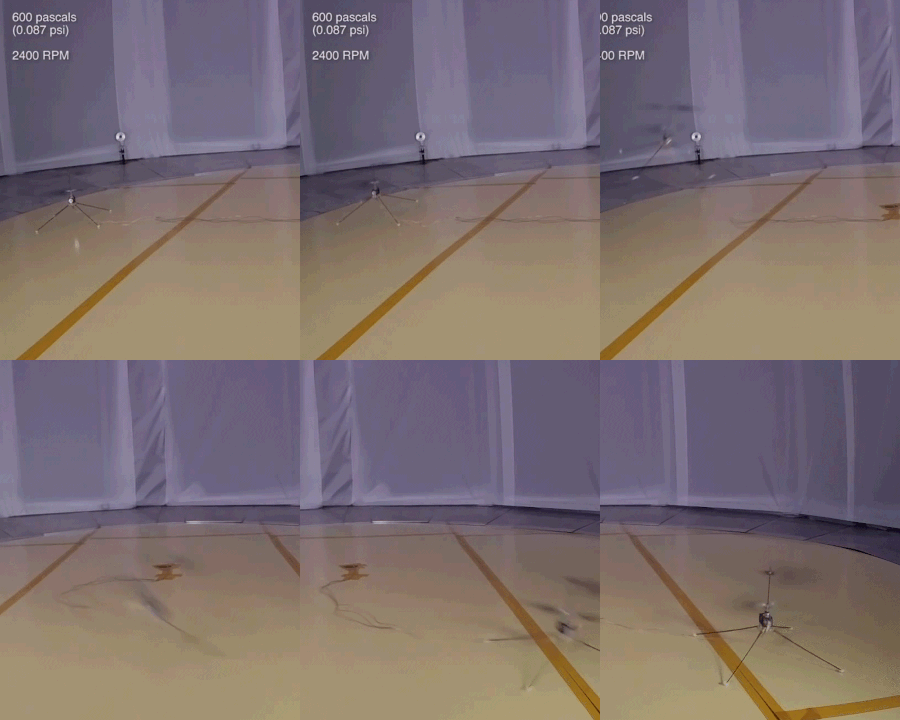


 Being
greater than ten thousand times brighter than sunlight, the
corresponding reduction in the area of the photovoltaic converter gives
rise to a projected cost of the SunCell® of about $50 to $100/kW
compared to over ten times that for conventional power sources of
electricity. The absence of fuel cost for a fully distributed and
mobile-capable power source, together with low capital costs that may be
amortize over a projected lifetime of at least twenty years enables the
generation and delivery of electricity for essentially all applications
at a fraction of the cost of conventional power source, all of which
have the further liability of pollution.
Being
greater than ten thousand times brighter than sunlight, the
corresponding reduction in the area of the photovoltaic converter gives
rise to a projected cost of the SunCell® of about $50 to $100/kW
compared to over ten times that for conventional power sources of
electricity. The absence of fuel cost for a fully distributed and
mobile-capable power source, together with low capital costs that may be
amortize over a projected lifetime of at least twenty years enables the
generation and delivery of electricity for essentially all applications
at a fraction of the cost of conventional power source, all of which
have the further liability of pollution.